
How can I improve my sculpting skills for creature design?
Jack Mercer
Course/Route:
BA(Hons) Game Art – Character
Project Details and Learning Goals:
Research and breakdown inspirational work from other artists and learn to improve my own workflows.
Rationale:
I have discussed with tutors a passion for cryptozoology and creature designs, and how I wanted to improve my own sculpting skills when it comes to creature design in the games industry. This project can move me towards this goal.
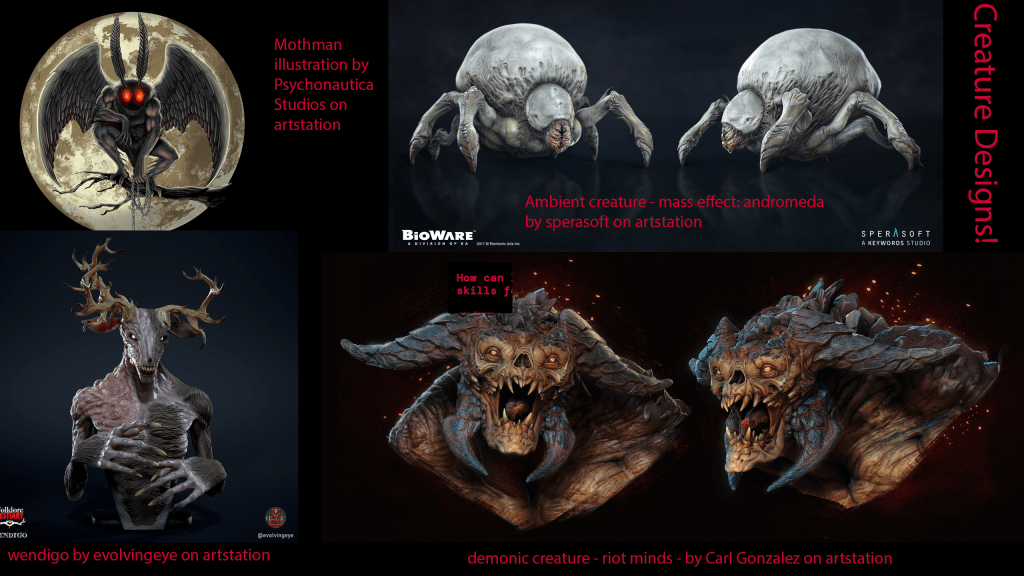
Table of contents
- Poster
- Introduction
- Creatures, Cryptids and monsters. What are they?
- Traditional art and folklore
- Modern media
- Cryptids and creatures in video games
- Professional artist workflow
- Sculpting a final piece
- Final compositions
- Drawing for games
- Referencing
Poster
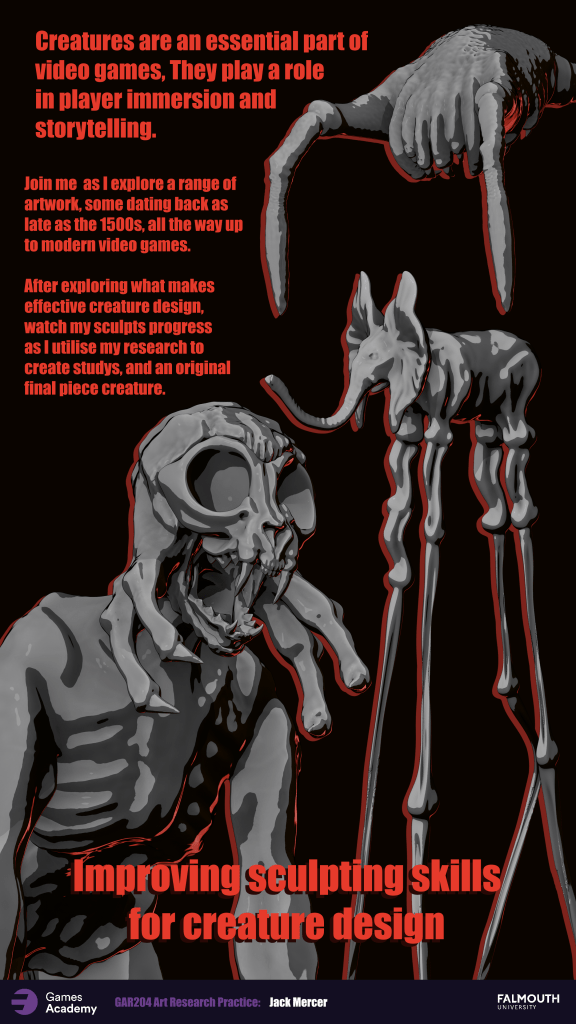
Introduction
Creature, cryptid and monster design is a vital part in video games.
Monsters and cryptids have plagued human storytelling for as long as our known history books can document. Especially within games, they are often used as storytelling for players. They might be used as a mechanic to help with the gameplay loop, or to add to essential immersion for players. In game creatures cant just be an afterthought. The player might need to be scared of the creature, which might affect how they might play the game, or as an essential puzzle piece to keep the storytelling consistent.
How are these beings constructed in engine? What do they represent? How do artists make fictional creatures believable to a player?
Throughout this project, I aim to examine the workflows of influential artists and explore how artists create believable and immersive creatures, with the goal of improving my own creature sculptures.
I’m going to look at a range of media, from historical artwork to modern media and video games, to find inspiration and reference for creature design to then later sculpt studies in zbrush based from my research, and create some models that could be used in video game engines.
To finish my project and showcase the new skills I have acquired from my studies, I will create an original creature in digital sculpting software zbrush.
Up until this point, I have mostly only modelled human characters, and clothing, so this will be new territory for me personally.
Creatures, Cryptids and monsters. What are they?
However, let’s define what cryptids, monsters and creatures actually are based on the history of the words themselves, as to set some ground rules, and better understand the references I have chosen
Monsters – From Latin, Monstrum [5]
a divine omen indicating misfortune, an evil omen, portent
Cryptid – From Greek kryptos (κρυπτός)
hidden or secret
(word origins are more modern and does not have historical roots)
Creature – From Latin, Creatura [6]
a creature, thing created
From the roots of the word, we can understand that creatures and monsters are beings that have been created, whether from divine omens, supernatural forces or by a deity, it could also simply mean that the creature is a figure of our imaginations, a hoax, or from fiction.
Even if the creature is entirely fictional, the fact it may move in a way that makes sense to us, and has been animated to do so, makes it a real creature, simply by the fact we made it up in our imagination!
The word cryptid has debated origins, as it was only coined within modern history, when cryptid researchers embarked on missions to track down and prove the existence of these mythological beings, for example bigfoot. They are known as cryptids as they are ‘hidden and secret’, and have no credible evidence to prove their existence, which comes back to why there is a lack of historical and scientific terminology.
Creatures in traditional art and folklore
The Garden of Earthly Delights is Bosch’s most complex and enigmatic creation [7]
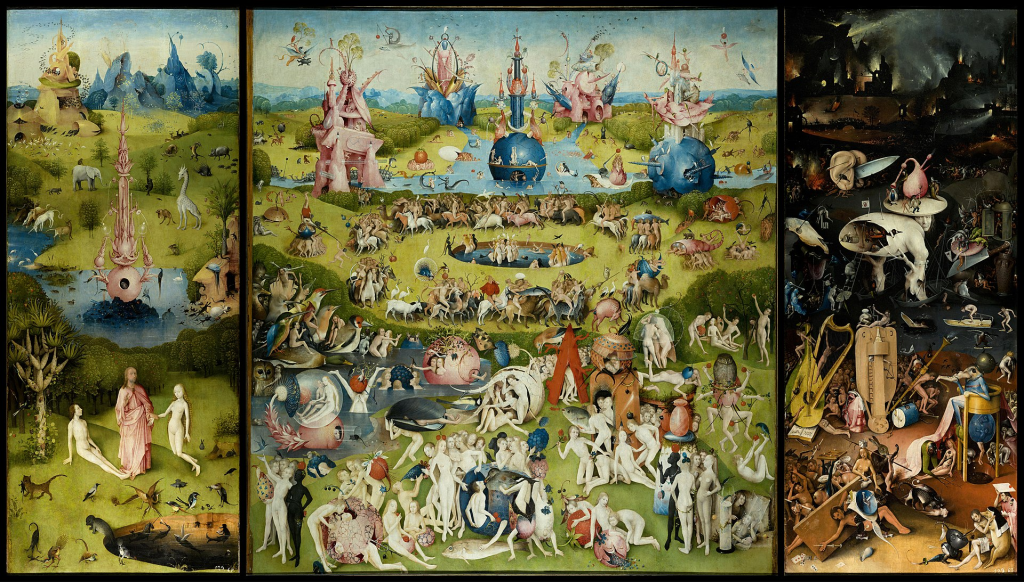
The garden of earthly delights is a 3 part painting meant to tell a story, of how those who commit sin, and reject the gift of humanity from god will be punished in hell.
The first painting focuses heavily on the creation of humanity, as it depicts God presenting Eve to Adam.
The second, and centrepiece of the painting depicts all sorts of humans acting very provocatively, and indulging in large quantities of food, and using the nature and animals around them for their own game and sport.
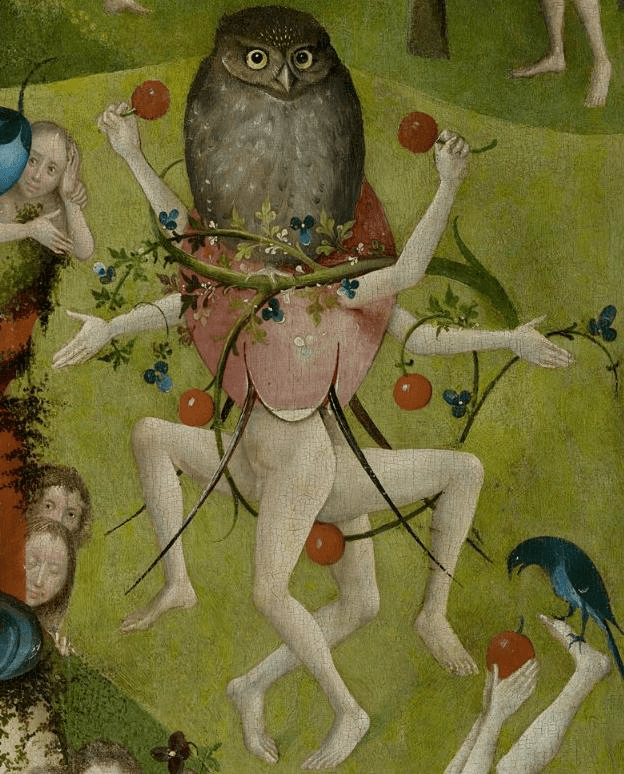
More importantly, many of the humans depicted in the middle painting are eating and drinking unnaturally sized fruits, and riding animals in circular motions, with seemingly no goal in mind. The humans are promiscuous and unapologetically adulterated together, many cuddled inside giant fruits in large groups. Many of the humans are deformed, or amalgamated into human, animal hybrids. From Bosch’s mind, he tells us how the human sins of adultery, gluttony and overindulgence is shifting, subsequently corrupting nature and humanity as a consequence.
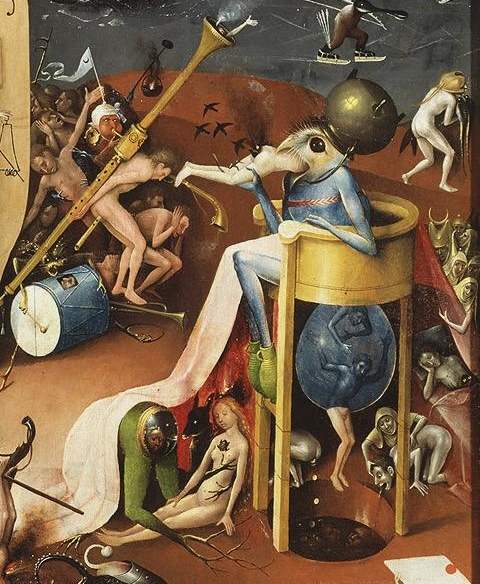
The final painting depicts hell, or hell on earth, where humans are being killed, tortured and even eaten.
Large, strange creatures often with features such as animal heads or giant bones are amalgamated into inanimate objects can be seen eating, and tormenting the humans.
The top half of the painting depicts war and civilisations burning, hinting towards an apocalyptic end to humanity.
The fantastical nature of the final painting represents final purgatory and punishment, from those who take a sinful path in life.
When coming back to our meanings of the word creature, and monster, these paintings show us of the most ancient beliefs on how our sins could leaad to eternal purgatory. It teaches the viewer that evil and sin will result in the creation of monsters, and humanity doomed to punishment by unnatural creatures and entities tied to the sins we committed in life
This all calls back to common modern tales of creatures and monsters;
As cautionary tales intended to scare, and spread the word of the dangers of sin.
The Great Red Dragon and the Woman Clothed with the Sun (1803-1805)
William Blake
‘Blake is today acknowledged as one of the most imaginative English poets and one of the greatest forefathers of English Romanticism’ [8]
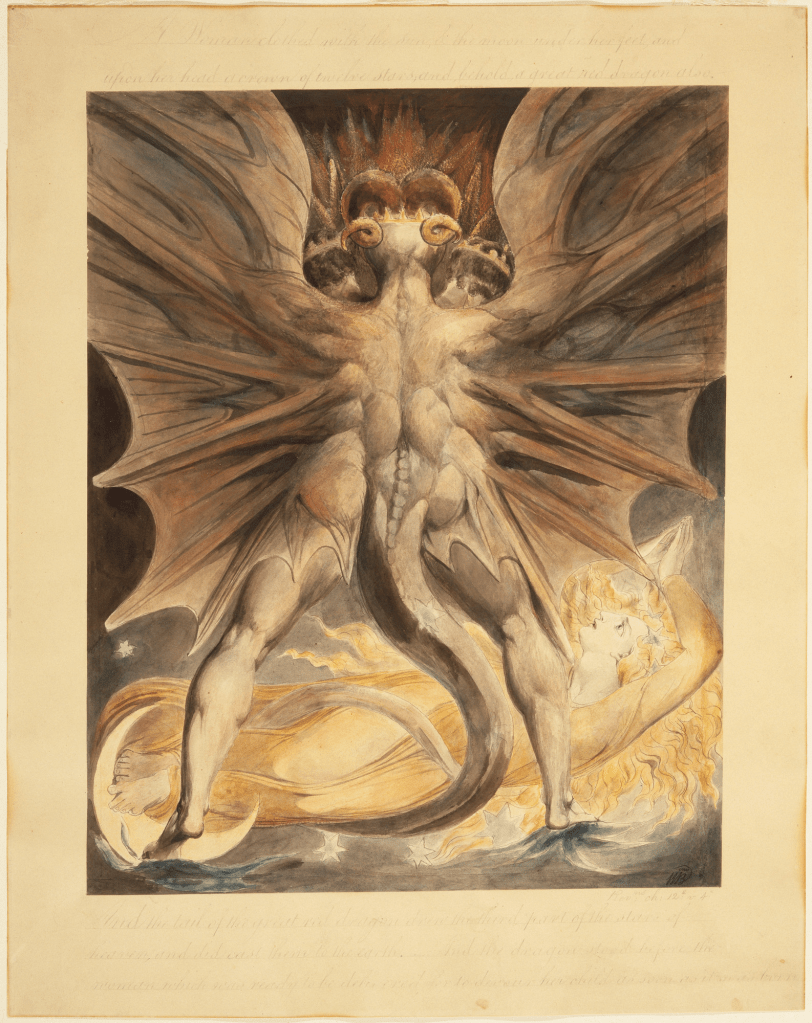
These paintings depicts lines from the book of revelation, ‘a great wonder in heaven, a woman clothed with the sun, and the moon under her feet‘, ‘a great red dragon, having seven heads and ten horns‘.
The pregnant woman wearing almost glowing fantastical clothing, is bearing a child, which represents humanities hope and salvation. The muscular dragon, intent on destroying and eating the new-born child, represents the evil, and the devils desire to crush human hope and steal salvation.

The dragon has a serpentine tail, which ties heavily with snake symbolism in bible stories. It also has large golden horns, which could be interpreted as a form of crown, symbolising power, and the corruptive goals of the dragon. Its large, muscular bat like wings symbolises dominance, and tells the viewers that this dragon is dangerous.
Blake lived during a turbulent time (post–French Revolution, rapid social change), and he often saw biblical apocalypse not only as spiritual prophecy but as social allegory. This shows that even throughout centuries, humanity has been portraying creatures and monsters as symbolism for evil, to spread the word of social and political issues, in media that is understandable to viewers from that era.
Creatures in modern media
The elephants (1948)
Salvador Dalí
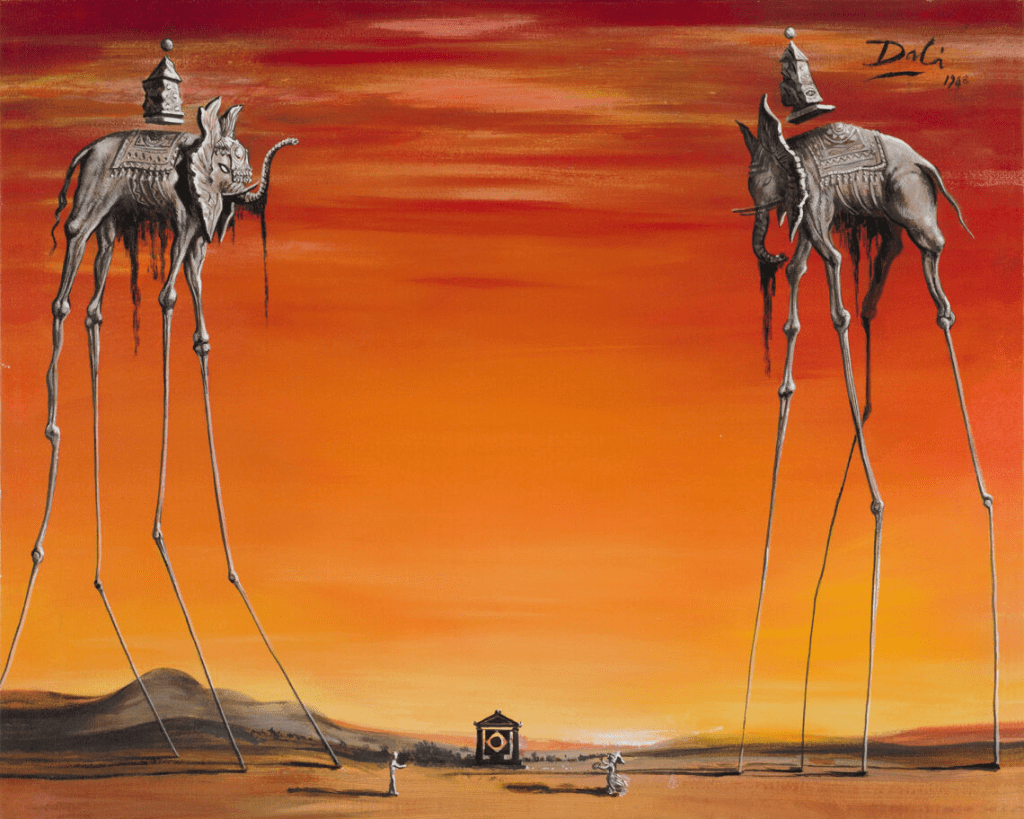
The work is imbued with the dreamlike and bizarre imagery for which Dali is famous [9]
Dali was world famous for his exploration of the dreamscape, and surrealism, most notably his reoccurring motif of the melting clock, from The Persistence of Memory. These visual elements have come to define much of his popular reputation.
While the painting originates within a surrealist context and to explore the dreamscape of our minds, when looked at as modern media, and factoring mechanical reproduction of art becoming a more common practise not long after its creation, its usage shifts, and the image has been reproduced numerous times in prints, most notably the changes occur when viewed through the lens of creature design.
I first encountered this painting in a café in Yorkshire, a small print framed on the wall, and it makes me think of a quote from Walter Benjamin, ‘Mechanical reproduction of art changes the reaction of the masses toward art‘ [10] Its usage in the café was simply to add to the quirkiness, and overall aesthetic of the café, due to the strange, alien elephants.
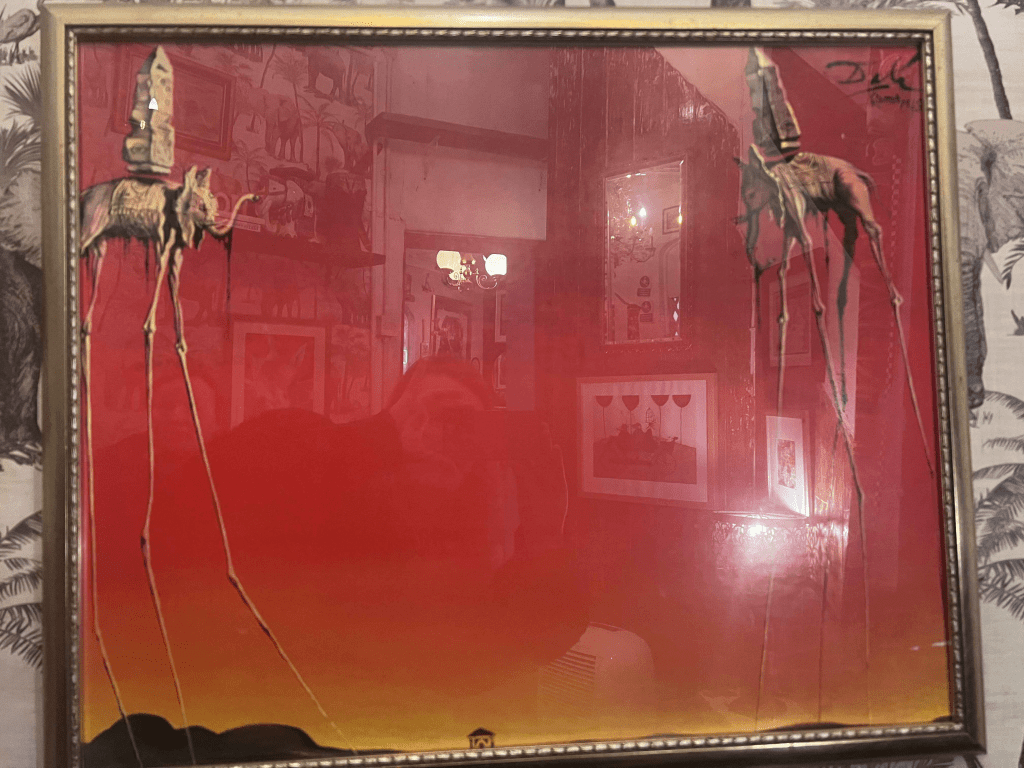
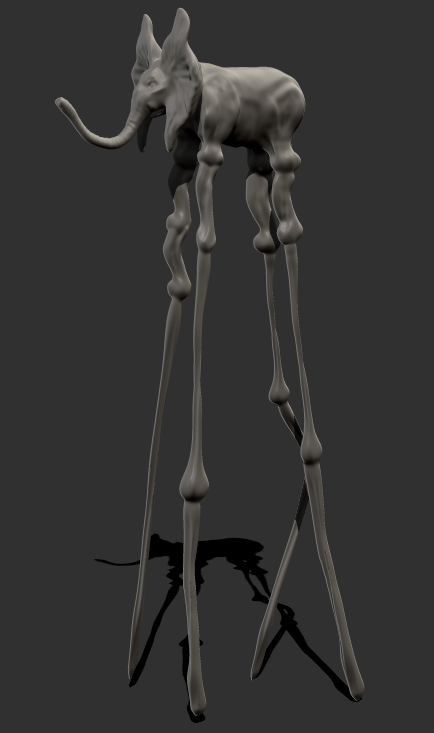
Dalí’s elephant motif exemplifies this shift, developing a new symbolic power as it moves away from the original surrealist meaning of the painting. When looking at the painting through the lens of creature design, ‘the elephants’ portrays the fragility of power, using strong, muscular elephants to represent vast power, and the long, spindly, alien like legs, symbolising fragility. Perhaps a weak point for the player to exploit in game? The flat and empty desert setting no longer resembles a dream like world, and now resembles science fiction in an alien planet reinforcing the creatures otherworldly presence.
Inferi (2009)
Harry Potter and the Half-Blood Prince — Warner Bros
“They are corpses, dead bodies that have been bewitched to do a Dark wizard’s bidding. Inferi have not been seen for a long time, however, not since Voldemort was last powerful… He killed enough people to make an army of them, of course.” [11]
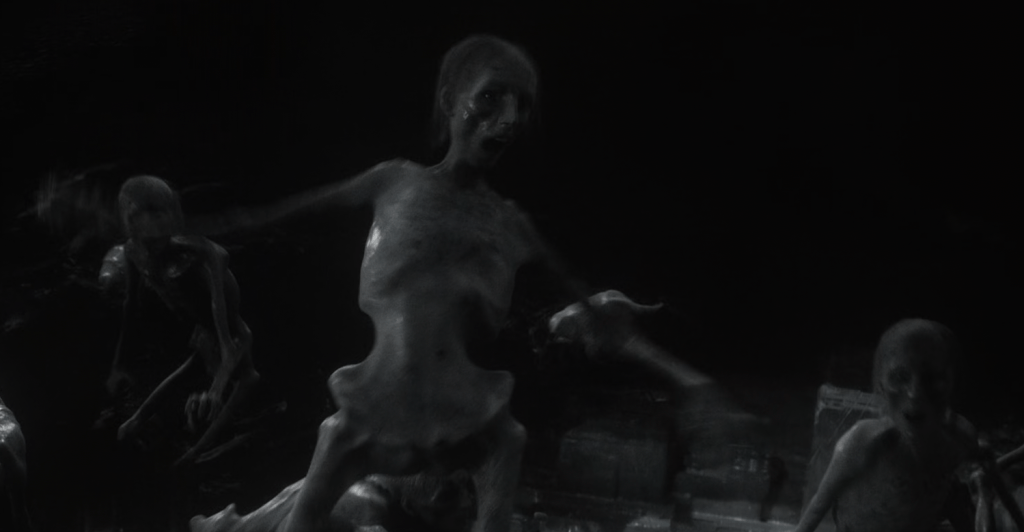
The Inferi originate from J.K. Rowling’s literary Harry Potter universe, however their most recognisable form comes from the film production ‘Harry Potter and the Half-Blood Prince‘. Warner Bros used a combination of visual special effects, and prosthetics to bring the Inferi to life on the screen. They are strikingly similar to the stereotypical zombie at first glance, but have one main difference, the Inferi are reanimated corpses, that are puppeted by dark wizards. They have misty eyes, unemotional faces, which symbolise their only purpose, to be a puppet and servant to the dark lords that summon them, and not a creature with its own agenda or free will. I like how the design reflects the fictional origins of their creation.
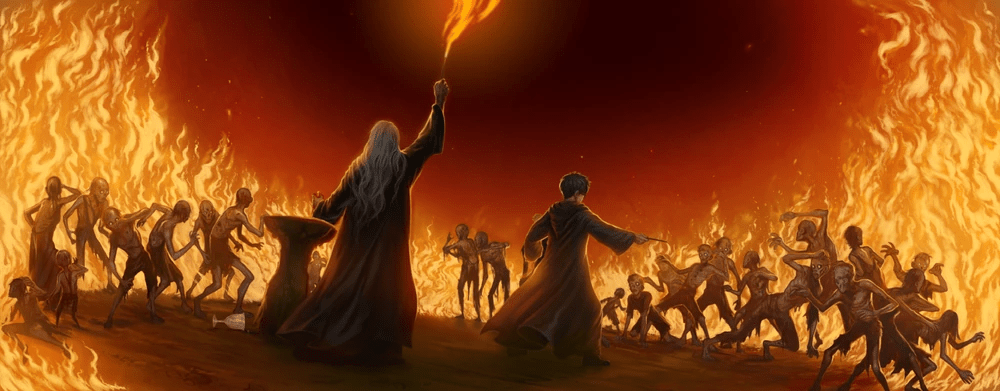
Looking through the lens of creature design, the Inferi rely heavily on exaggerated human distortion rather than entirely fantastical anatomy like Dali’s elephants, or the red dragon. They have shrunken skin wrapping around their broken skeletal frames. They move irregularly and aimlessly, due to their emaciated and decomposing bodies. The most intriguing part of their design to me is that Inferi exploit the familiar human form to strike a feeling of uncanny fear into the readers and viewers for the films. This is a really powerful, and surprisingly simple approach to creature design.
Despite their uncanny human form, like Dalí’s elephants, the Inferi derive their impact from contradiction. They are human, yet no longer alive; physically fragile, yet overwhelming in number and persistence.
Cryptids and creatures in video games
Until dawn – Supermassive games (2015)
Until dawn is a horror, survival drama game. Players control 8 characters, who have to survive in blackwood mountain. The game is mostly cutscenes, and third person exploration. Players can choose decisions for the characters to make affecting the story, or explore the world in the third person mode to uncover clues. The game has lots of different endings, some good, and some bad, mainly depending on the decisions chosen in the cutscenes.
Until dawns take on the wendigo
The wendigo, similar to the inferi from harry potter, use a distorted human form to invoke uncanny fear into its players. Wendigos exhibit a drastic mutation of human anatomy, acquiring a disfigured yet powerful form. Wendigos are the embodiment of hunger, which affects their structure by loss of muscle mass and organ mass, instead using a skeletal structure for the primary detail, their limbs also become longer, amplifying the creepy, slender appearance, making them taller than the average human.
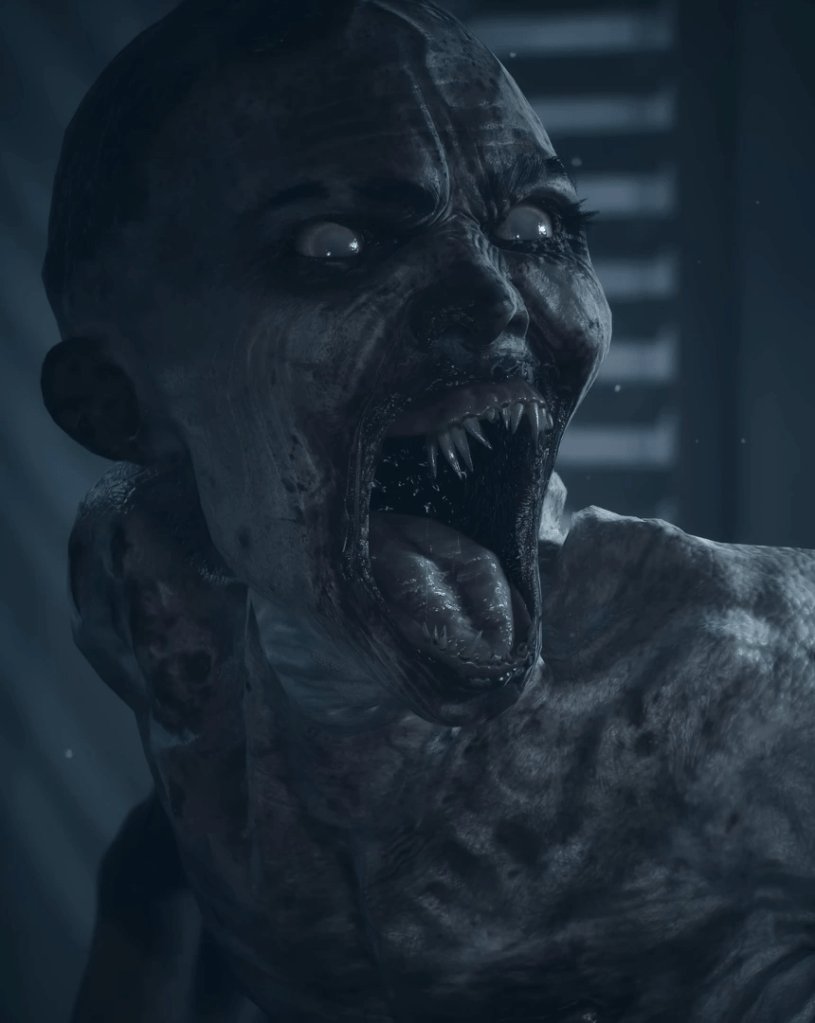
The wendigo has lots of contradictions to its design. For example, from a distance we see a broken, hunched over skeletal figure, and might think that the wendigo must be slow, fragile and old due its figure. The hunchback posture however, allows the wendigos to move on all fours, which makes them impossibly agile. I love details like this, as it makes the creature seem like its full of surprises and unpredictable, perfect for a horror game where decision making is the main way of progressing the story. Its also another interesting way to make its human form appear even more uncanny, it looks human, but doesn’t walk like one.
Head crabs – Half-Life saga – Valve (1998-current day)
“the most iconic aliens of the Half-Life series, serving as a mascot in the same vein as Gordon Freeman and his Crowbar” [15]
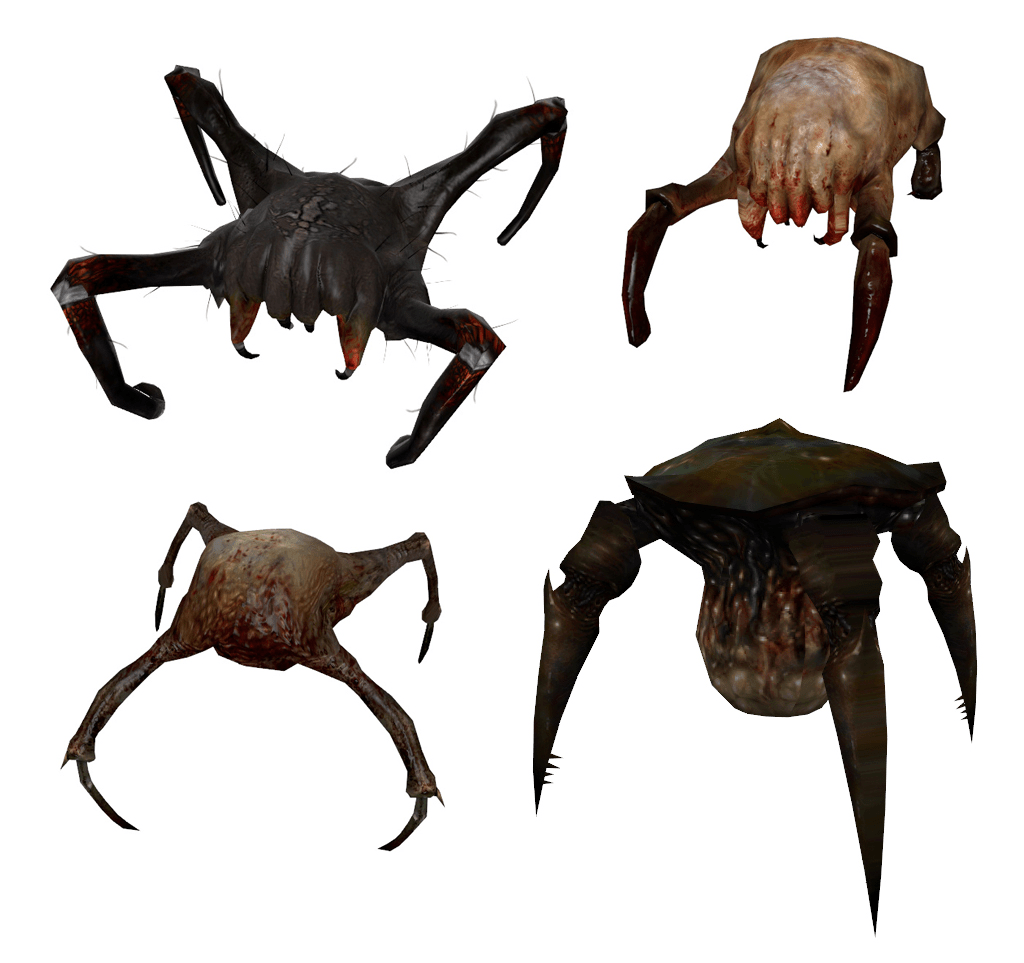
Headcrabs are a parasitic species, attaching to the host’s head and clamping onto their skull using their sharp beak. After breaking through the skull, the Headcrab proceeds to take over its host’s motor functions through some unknown biological process, keeping its host alive but helpless through the entire process. I love this creature as it tugs at our natural human fear of parasites and infectious diseases.
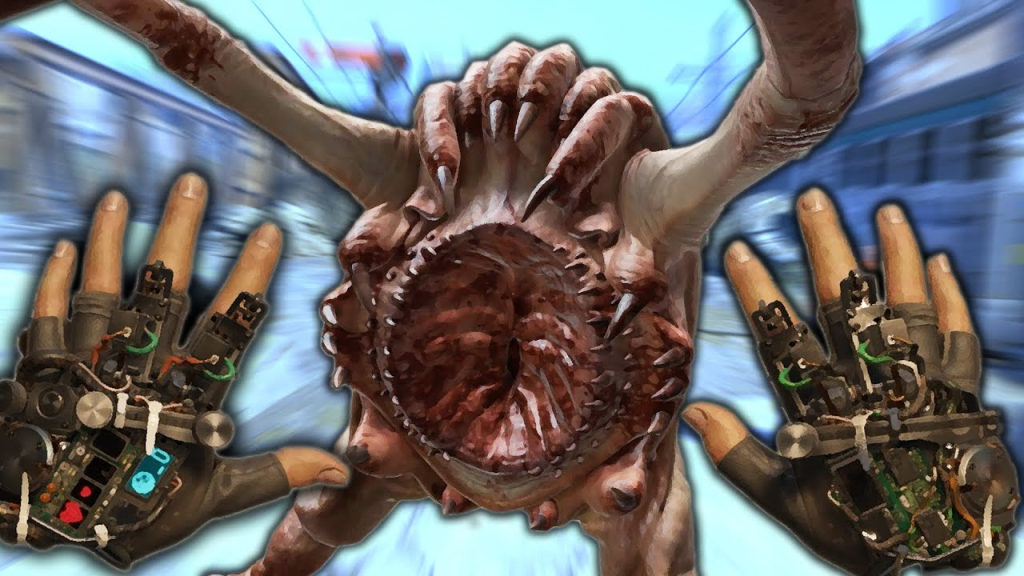
Headcrabs are TERRIFYING in Half Life: Alyx – RizzleDigz [16]
The headcrab is the smallest creature I have looked at in this paper so far, but I believe its small and spindly size adds a lot of depth to the character. It tells the player that this small spider like creature could be scuttling around hidden areas, or find themselves a way into seemingly safe in game areas through small cracks, making no area we explore in the half life universe feel perfectly safe.
As stated above, the head crabs have large beaks in the base of their bodies, surrounded by large powerful claws, teeth and fangs, which showcase the immense force and damage these creatures could apply to their victims once they latch onto human heads.
My favourite part about the creature design on the headcrab is how simple it is. Its a parasitic little alien spider, and all of its features have a ‘use’ in its fictional universe. Its simplicity, allows it to be a starter enemy in the games, and can be seen throughout all stages of the game.
Practising professional artist workflow
Study #1
I started by working on an uncanny zombie creature, using the wendigo from until dawn, and the inferi from harry potter as references for this study. The main objective for this study was practising implementing uncanny fear into my sculpture. I figured this would be a good one to start with for my practise pieces as it still retains a human form which I am quite familiar with.
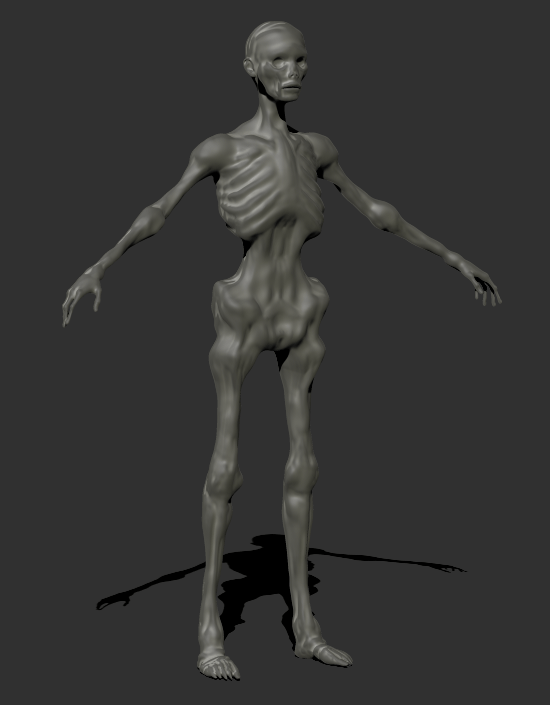
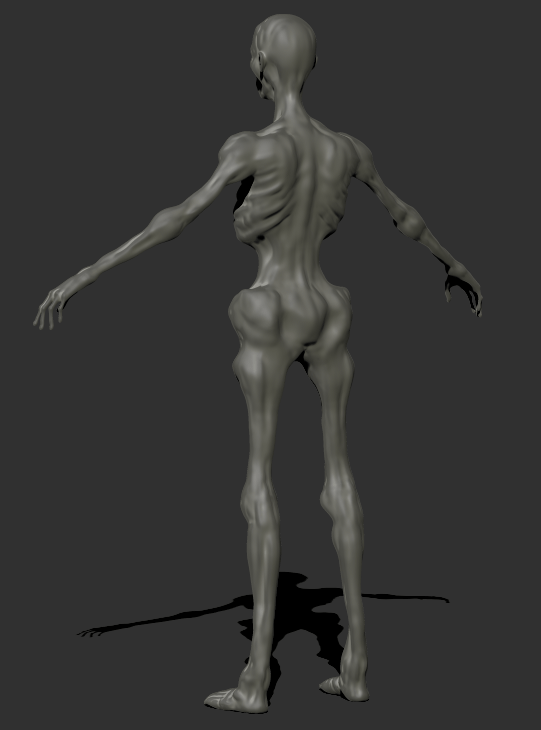
I put a lot of effort into shrinking down skin where organs and muscles sit in the human body, as they would have decayed long before the character started to look like this. I actually used human skeletons as references for where I should focus on putting bony detail on standout bones, such as the ribcage, The pelvis, around the cheekbones, and many of the connecting limb joins, like shoulders, elbows and around the knees. It created a really nice skeletal effect on this model, despite being fully covered in skin.
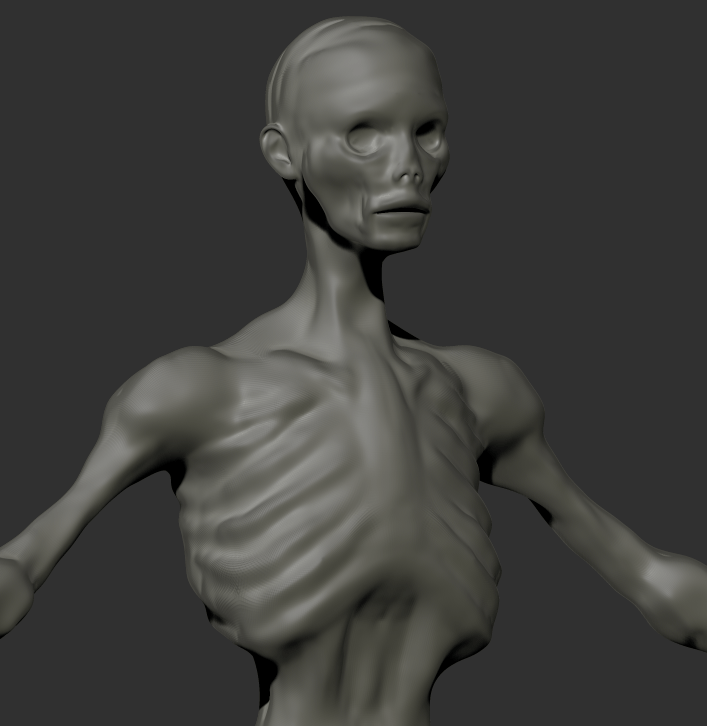
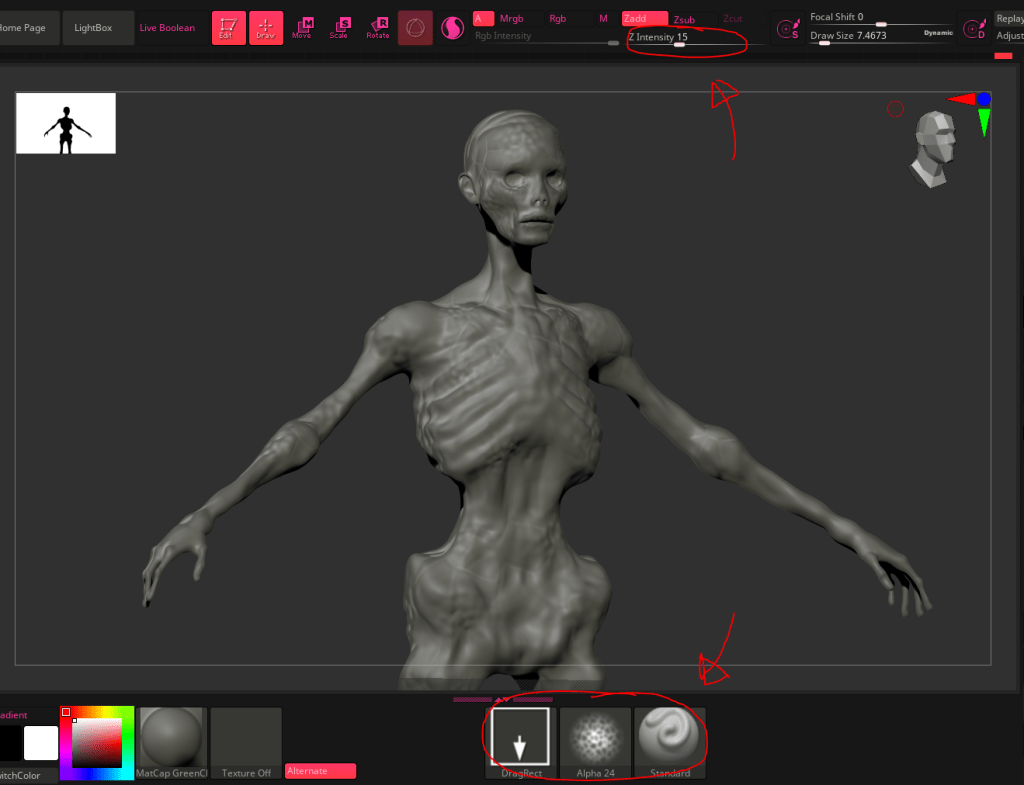
Alphas make it really easy to quickly add boils, cracks, and broken pustulating areas to the flesh, helping sell the illusion that this model has been reanimated from the dead. Overall I was really pleased with how this study turned out! It defiantly captures the uncanny look I was going for. Discovering the powerful effect of uncanny anatomy has been very interesting throughout this project, and I would love to replicate this on the main body for my final piece.
Study #2
Next I decided to do a headcrab study. I decided to block out the rough shape just using multiple spheres, and moulding them using the move topology tool. I also used spheres to block out where the fangs and larger teeth were around the base of the headcrab.
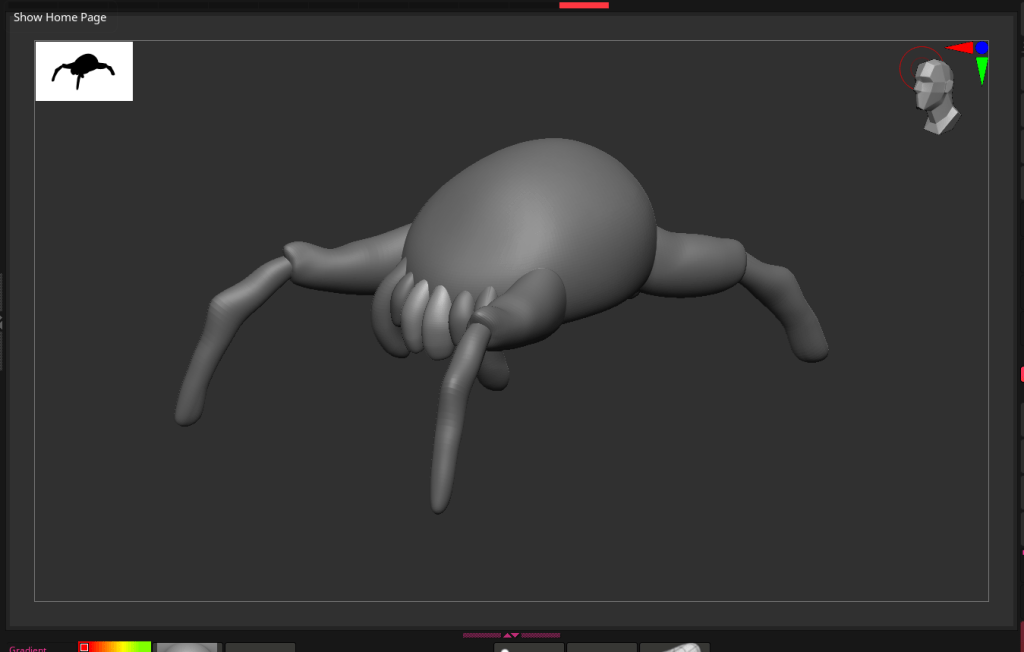
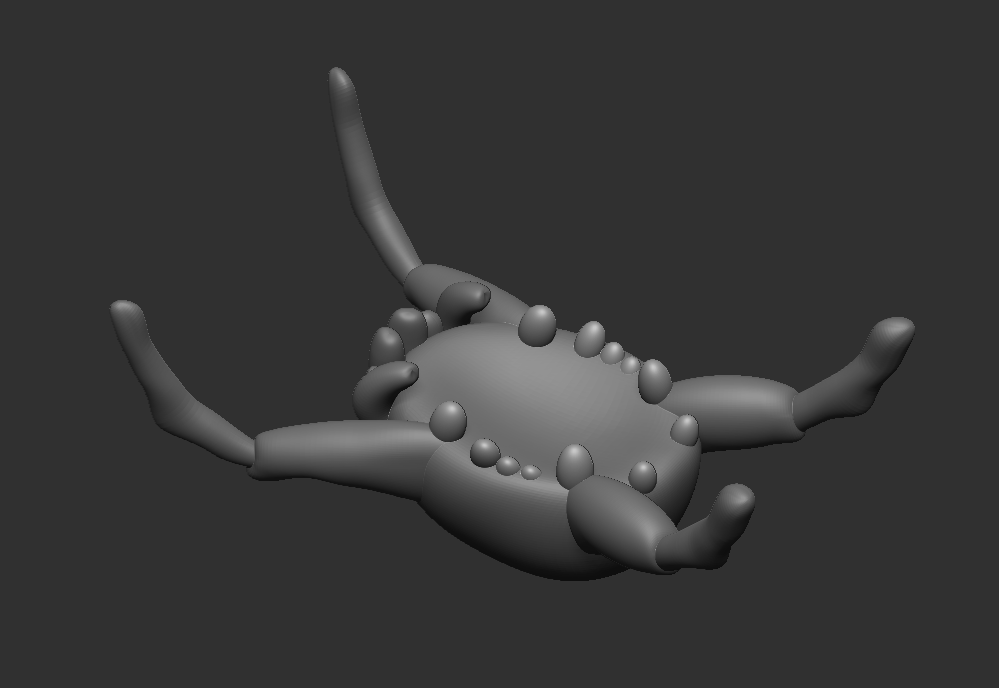
Next I focused on refining the shape, and adding more detail. I used dynamesh to merge my blockout together, and refined using just the basic standard brush and move topology brush again.
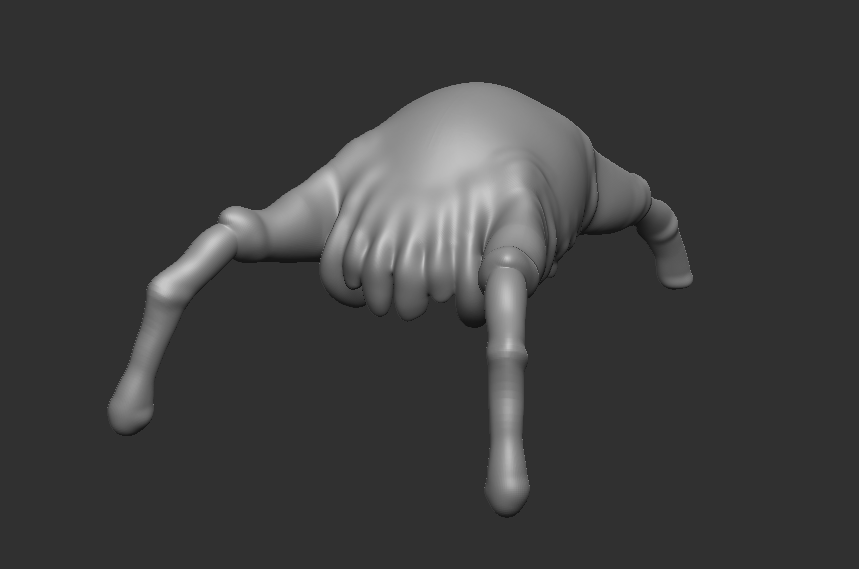
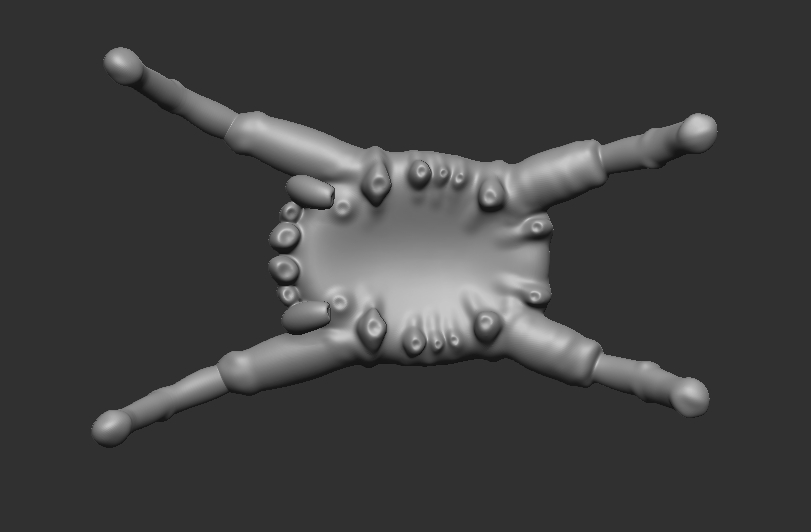
For detailing, I again blocked out all the teeth using a sphere and stretching the top, I used a large circular alpha to make a beak outline, and used some more subtle alphas, similar to the inferi/wendigo study earlier, to add boils, lumps and inconsistencies you would expect to see on an alien biomass. This turned out really well, and I loved how the beak on the underbelly turned out, looking really unsettling.
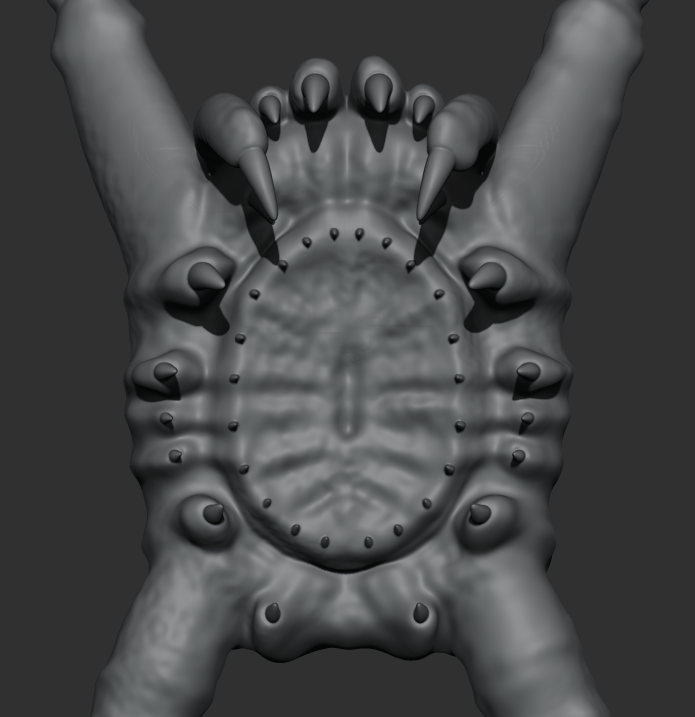
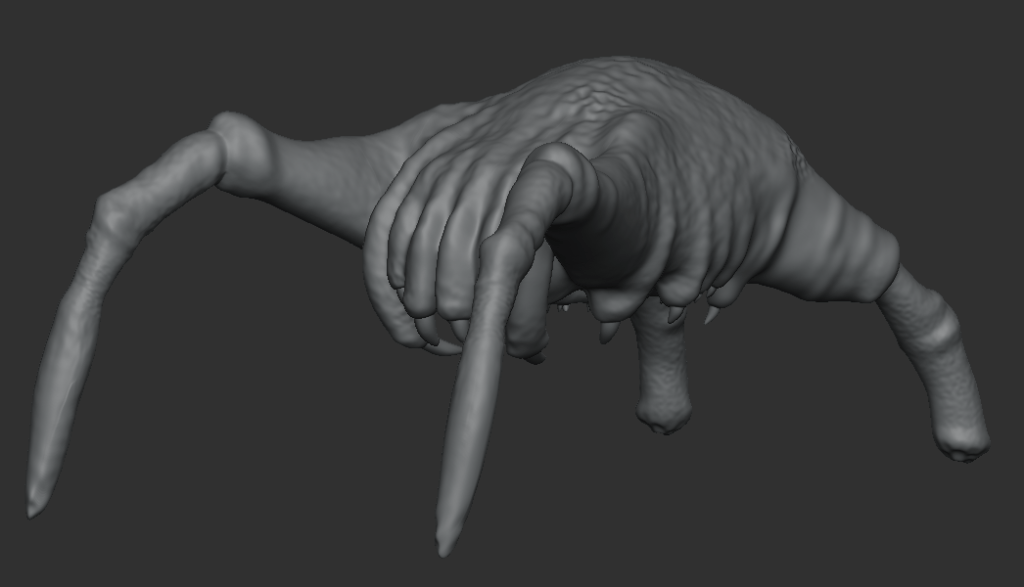
overall I was very happy with how this study turned out! I did extend the front legs a little bit after reflecting back on the references and pictures from the game trilogy, however the time I spent detailing the beak, which is the main element for my improvement in creature design, turned out amazing! Extremely happy with the detail and model overall! I really love the creepy mandibles, and would love to use some of these new skills to make a really creepy mouth on my final piece.
Study #3
Next I decided to do a quick study on dragon wings, using the The Great Red Dragon and the Woman Clothed with the Sun as reference. I started by just blocking out the rough shape with spheres, and a plane, as to separate the wing limbs from the actual folds of the wing.
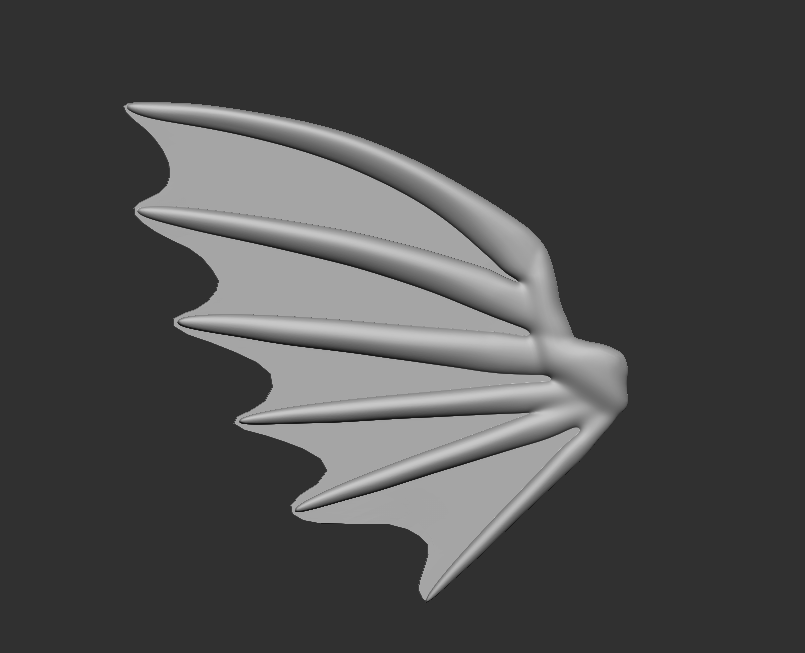
After I was happy with the rough shape, I made the plane 3D, and dynameshed the two separate subtools together. From here I worked on smoothing out the limbs and the folds, and adjusting the shape.
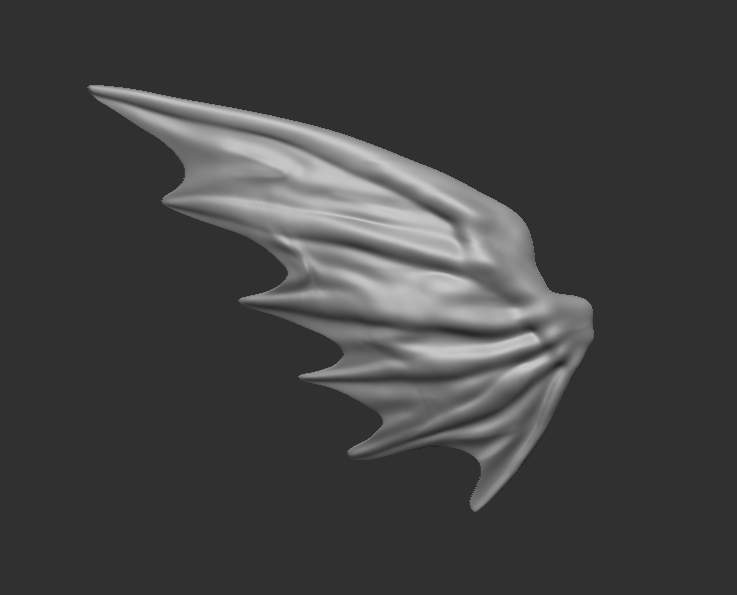
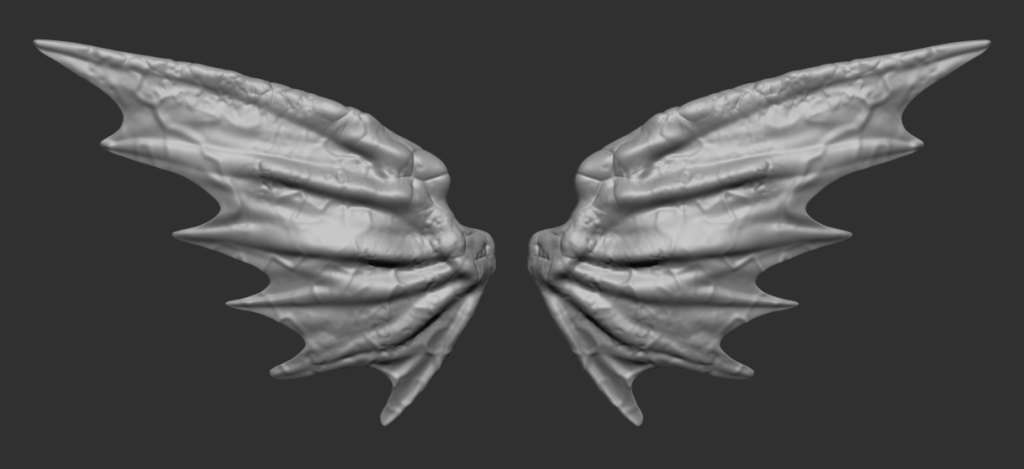
I added extra details using alpha maps and noise brushes, to add veins, and scaly bumps to add to the ‘armoured and powerful aesthetic’. I worked heavily around the base of the wings, adding muscly definition, to also contribute to this.
Overall I was happy with how these wings turned out, but wish the front of the dragon was more visible in the references so I could at least sculpt out a body as well. Wings might be cool to add onto my final piece.
Study #4
Next I wanted to practise sculpting spindly alien legs using ‘the elephants’ as a reference. I started out with the hippo zsphere premade using the ZeeZoo assets that come with zbrush, just to get the rough shape. I converted it to mesh using the adaptive skin modifier.
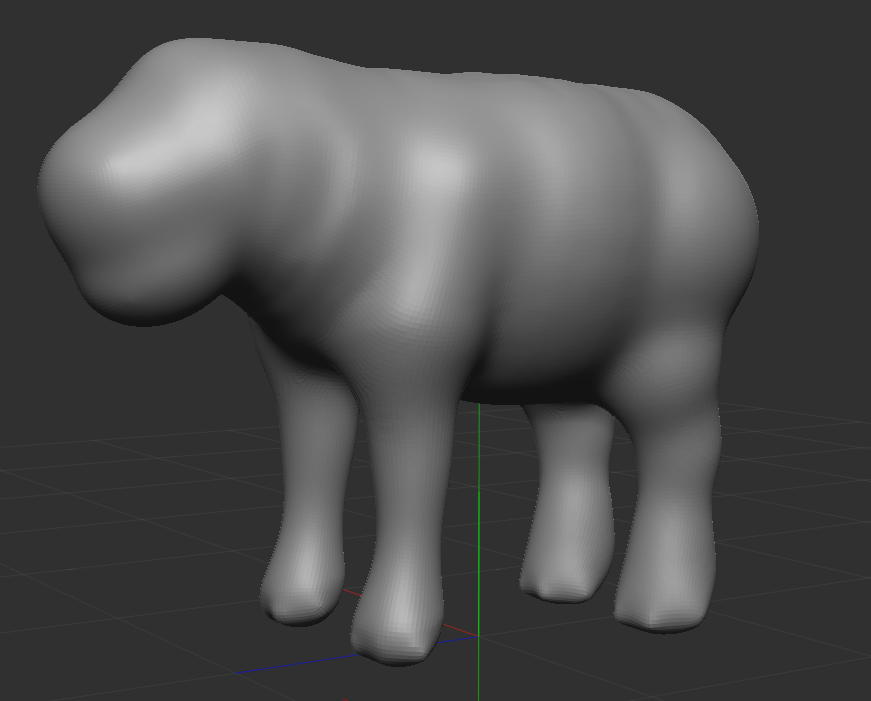
After tweaking the shape, I blocked out the rough shape of the trunk, mouth and ears using spheres. I also shortened the legs into little stumps to allow me to block out the sections of leg using more spheres.
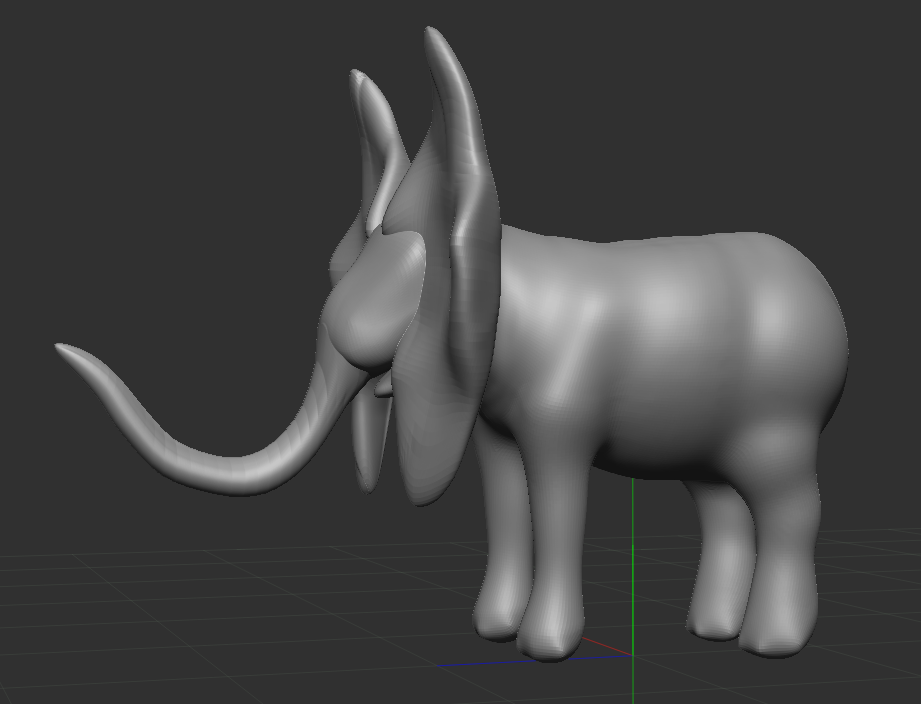
For detailing, I kept this study pretty simple, and mainly just used the standard brush to etch in detail. I found that the inflate brush was really good for making the knobbly knees really pop on this study.
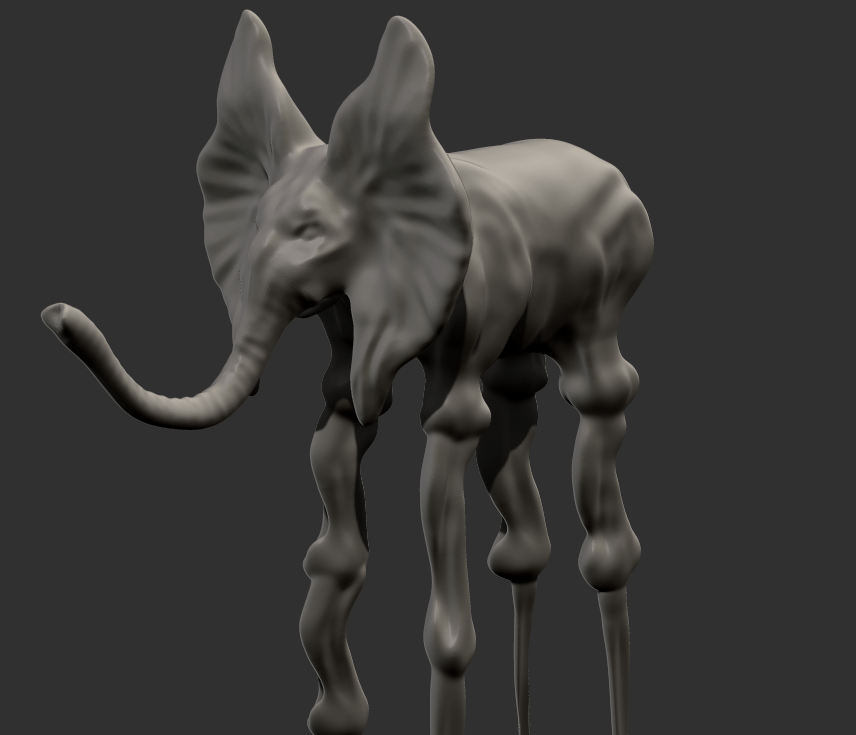
Overall I was super happy with this model, and I think I recreated a super accurate study of Dali’s elephants. I really love how creepy the alien legs look, and I would love to incorporate something similar to my final piece.
Sculpting a final piece
After my research and study’s I felt very confident going into this project. I had practised the art of using uncanny anatomy to create creepy models, studied how alien flesh, mandibles and mouths could look on a video game creature, and experimented with unnaturally spindly elephant legs, and was ready to put this into an original model.
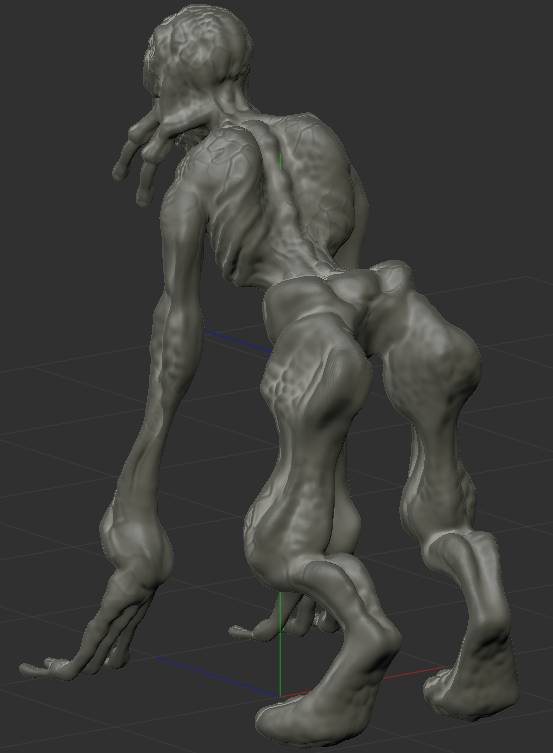
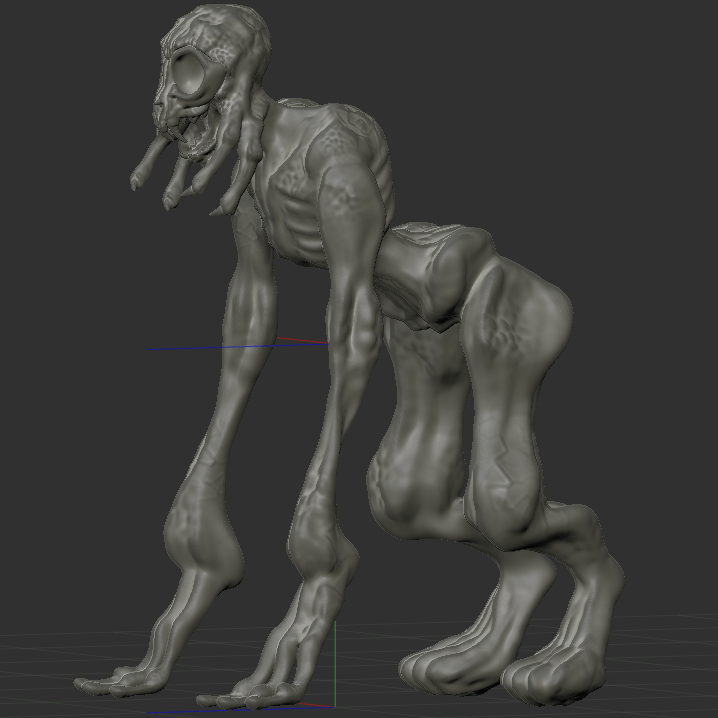
I started by blocking out my character, and modelling a simple distorted human skull. I stretched the mouth of the skull out, added some canine style teeth, and made the mouth gape unnaturally wide, giving my creature an uncanny smile.
The chest was based from my inferi/wendigo study’s, but I decided to experiment with the legs and arms. For the hind legs, I went with rather large spheres, in hope that I could create a more powerful and muscly demeanour. I also blocked out a rough digitigrade shape on the lower half of the legs, hopefully creating more animalistic hind legs, instead of purely focusing on distorted human form.
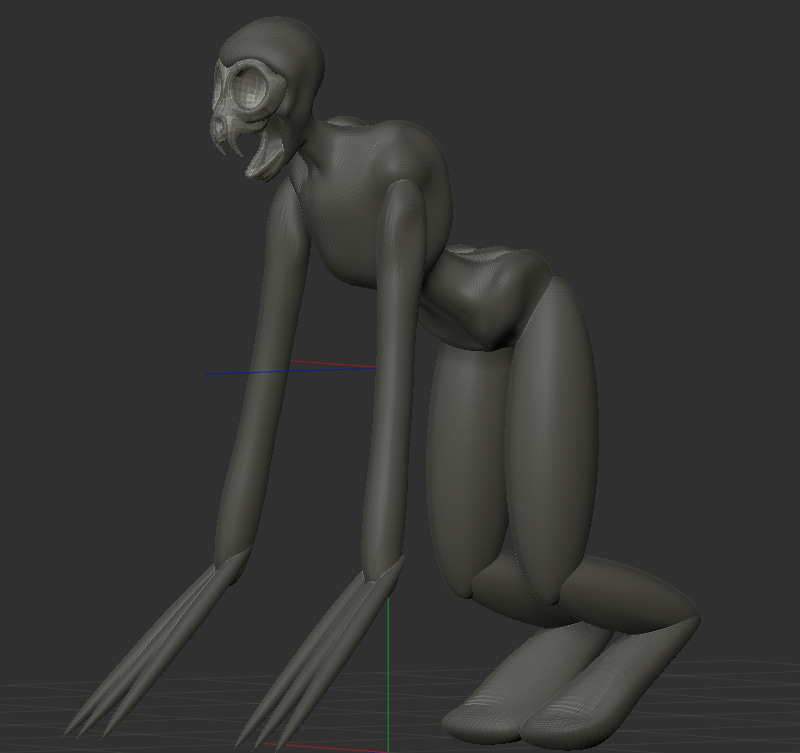
For the arms, I blocked out long spindly arms, based off my Dali elephants, but this time instead of little small spikes for feet, I created three long and backwards folding fingers for each hand. This will hopefully play into the distorted human form, and create some unnatural, yet multipurpose fingers, now more functional for a creature that might walk on all fours.
Before I dynameshed all the limbs together, I spent a bit more time refining the shape, carving muscles, and sinking skin between standout bones. Not only does this help me get to the detailing stage faster, it allows for much more seamless merging when using dynamesh, as the transitions between blockout sections are already cleanly flowing together before its even merged.
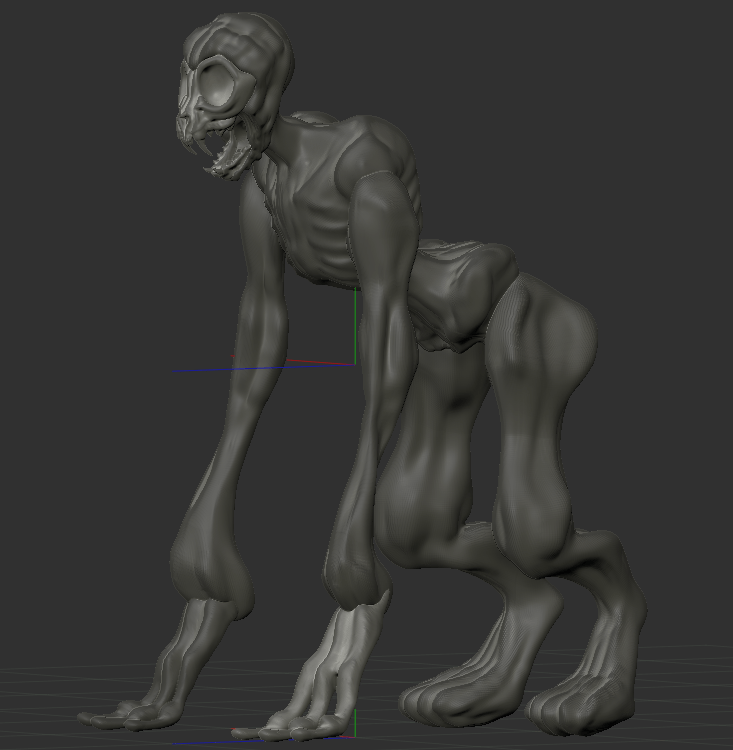
Before I started working with alphas to add the final detail to the skin and skull, I added the mandibles, and put some effort into refining stretch marks for skin around the mouth. I really liked how insect like the mandibles transformed my model, and makes it really unique. I can imagine this creature using them to tear into victims perhaps an eldritch creatures version of cutlery, considering how the long arms are now used more for walking.
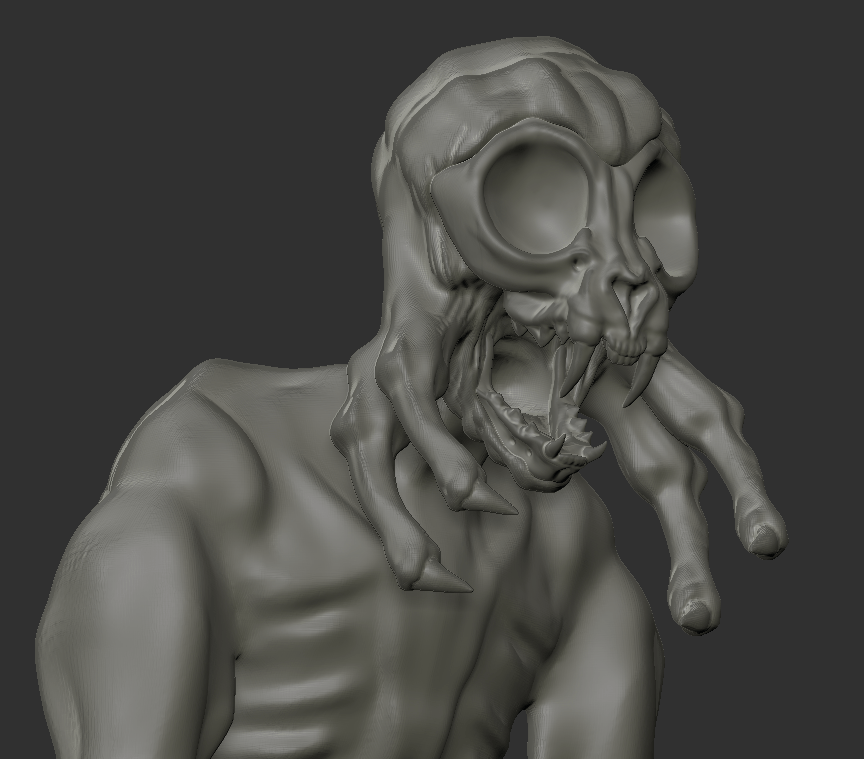
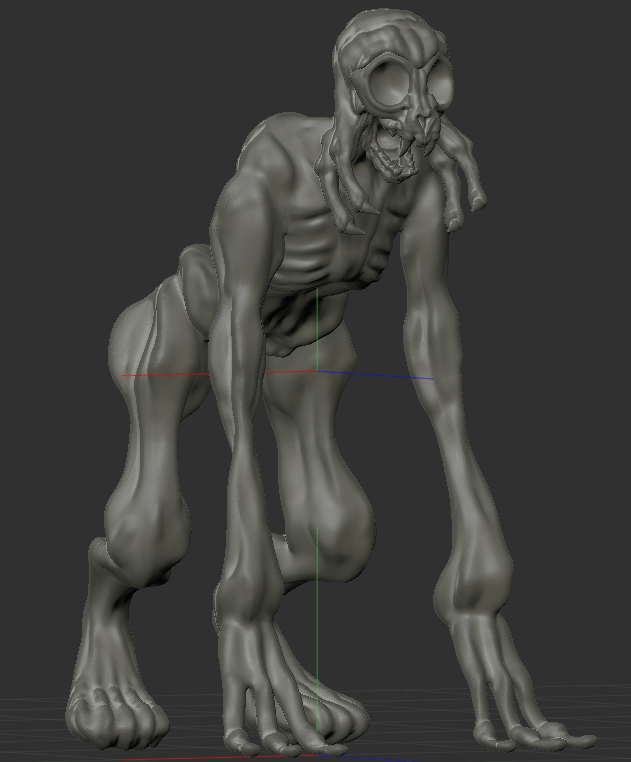
To finish off the detail, I used alphas to drag on veiny detail and crusty spotty clusters, so help sell the illusion of rotting flesh. Overall, I was really happy with the finished model.
Final composition
Rigged, and rendered in blender:
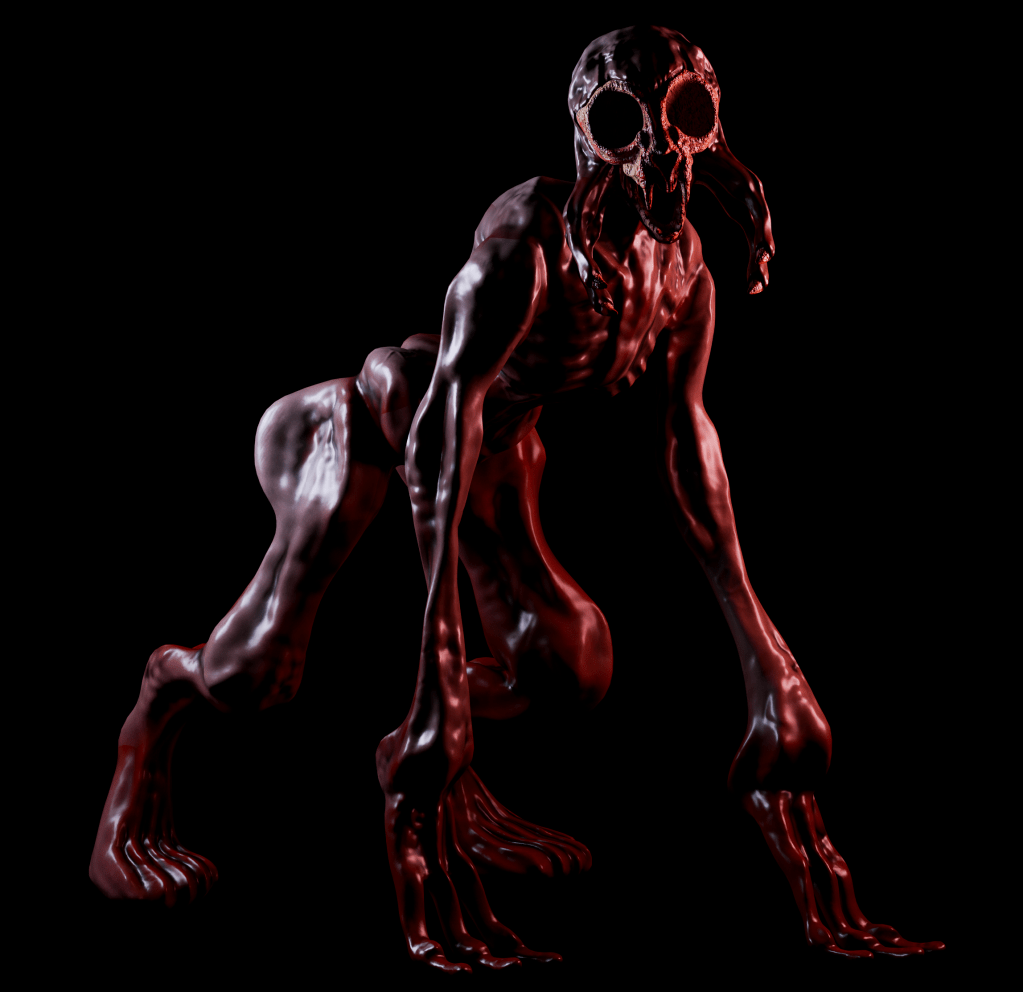
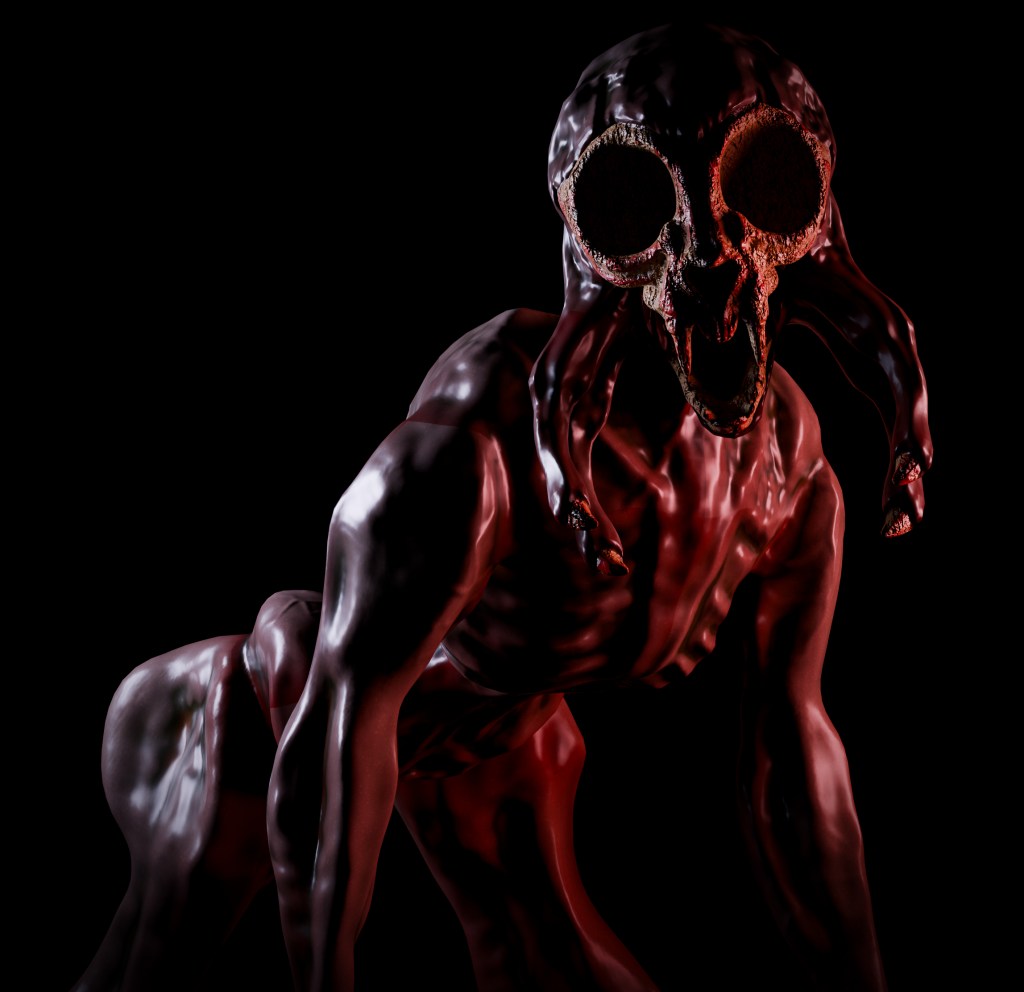
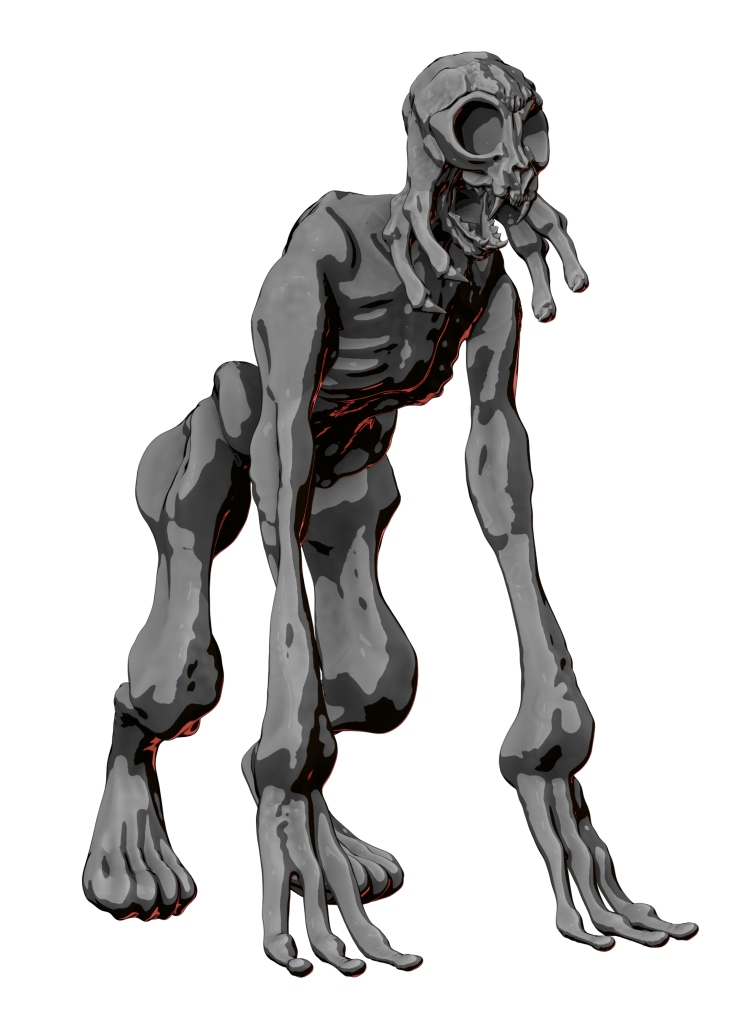
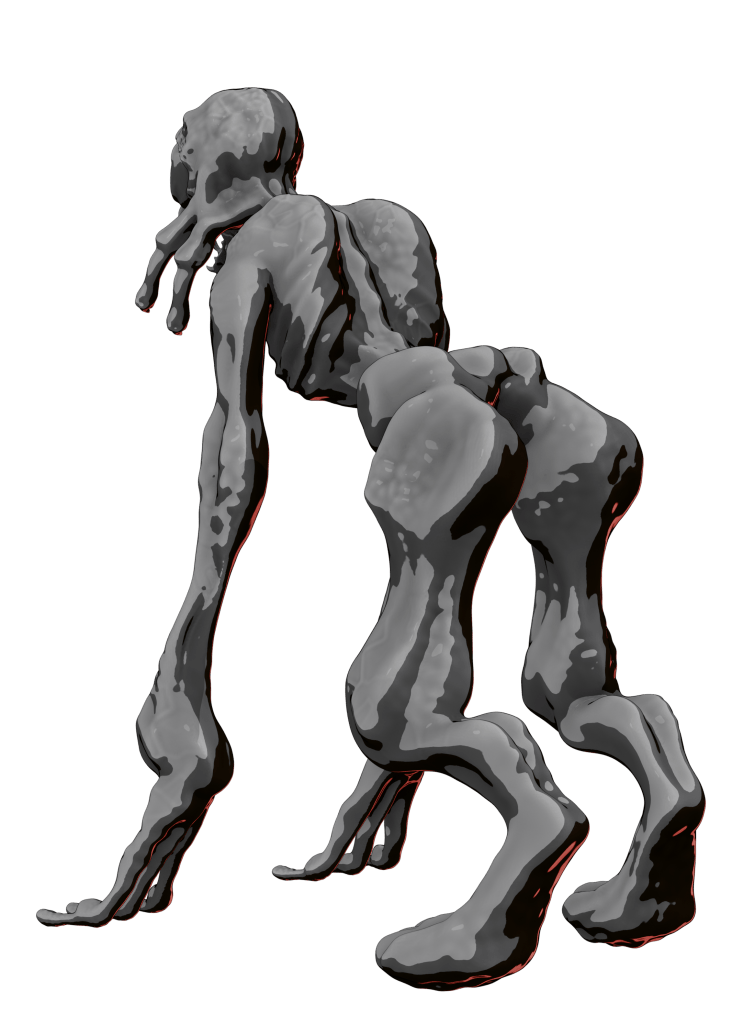
Overall, I was more than happy with this final piece. I successfully used multiple sources of reference, some of which from places I would not have usually looked, and used the information I uncovered to create something extremely creepy, but most importantly, original.
Looping back to my question ‘How can I improve my sculpting skills for creature design?‘ I can conclude I was more than successful.
However, if I were to improve this project, I would love to have spent more time on my dragon wings study, and found a way to incorporate that into my final piece.
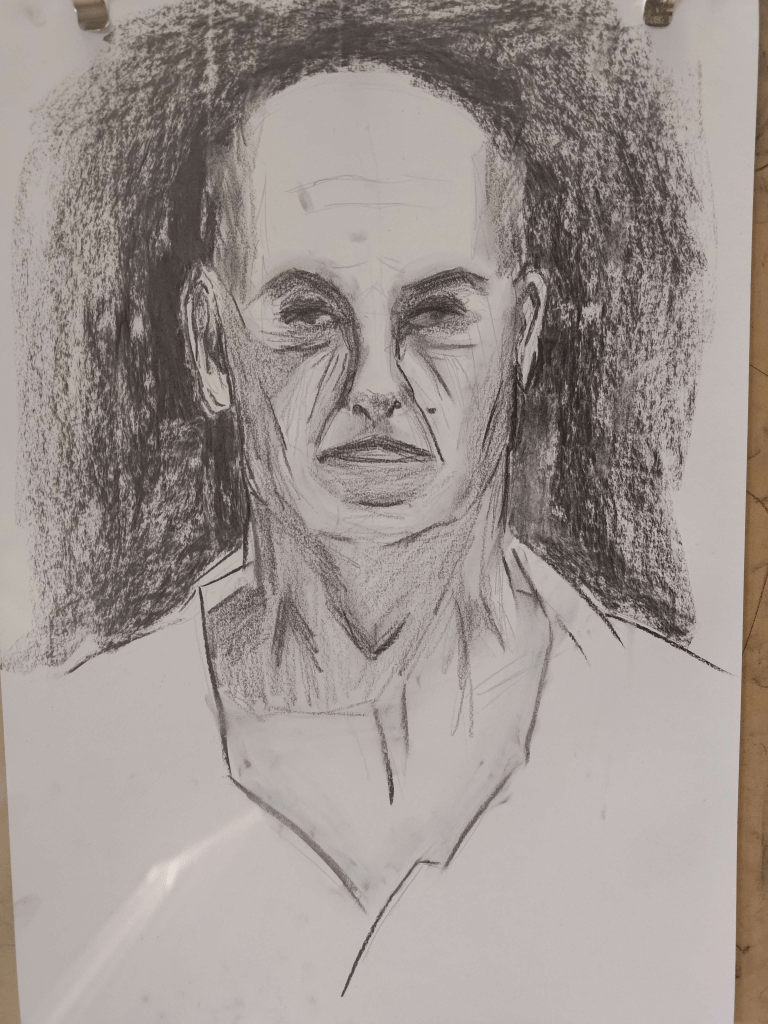
Drawing for games
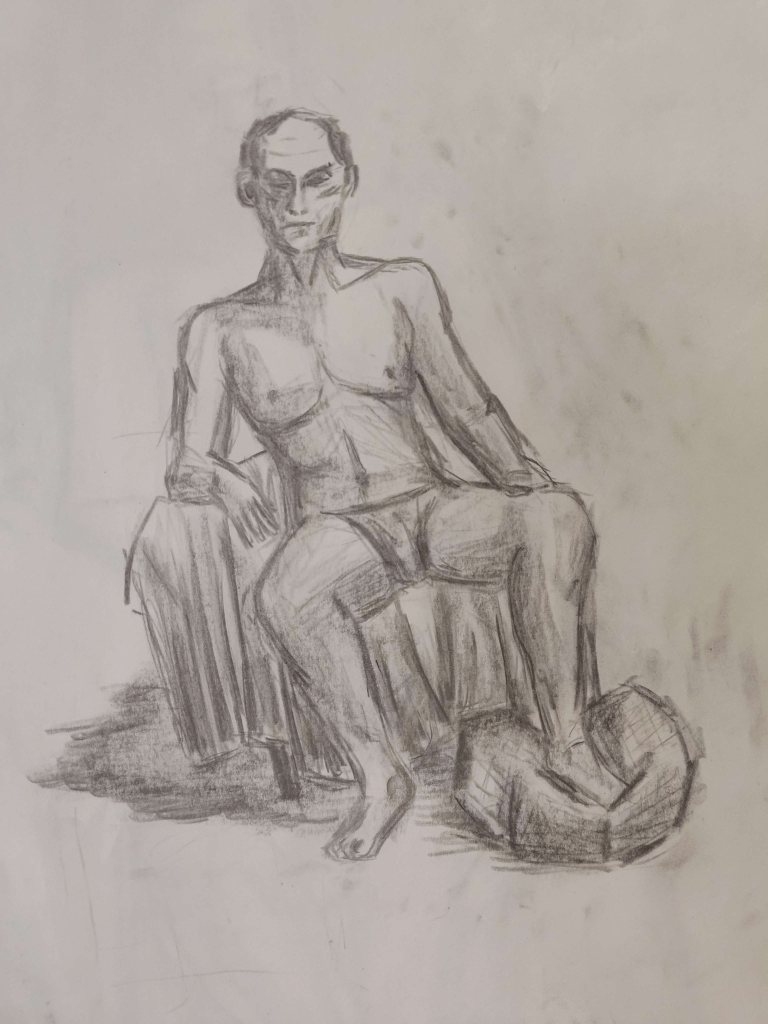
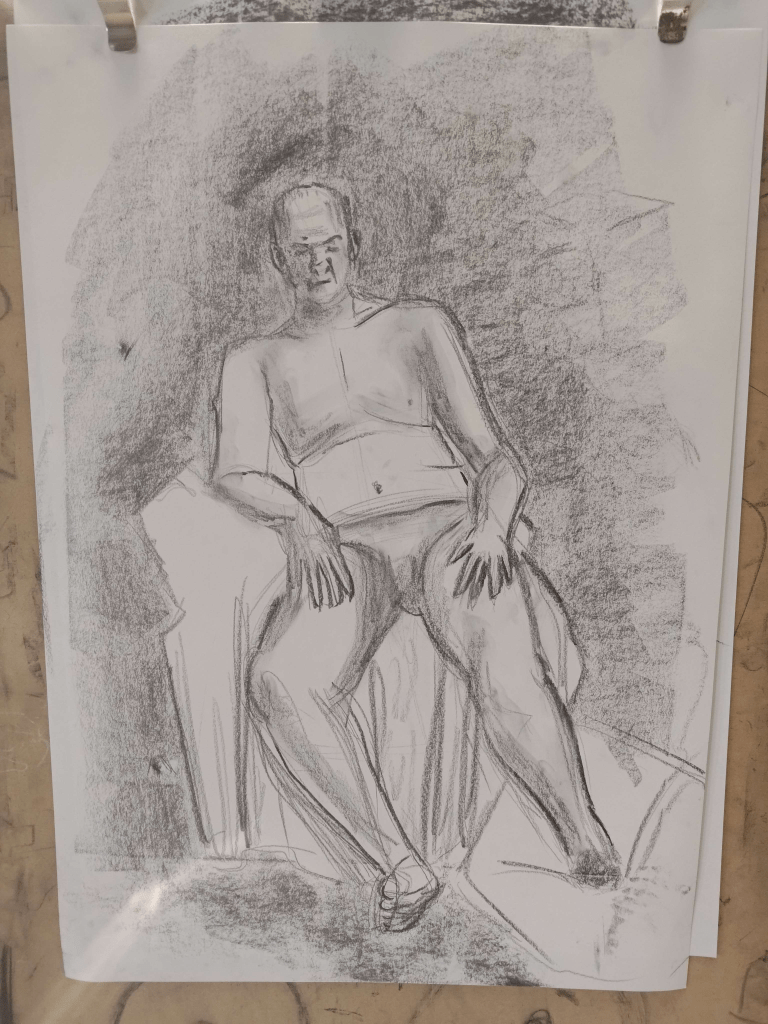
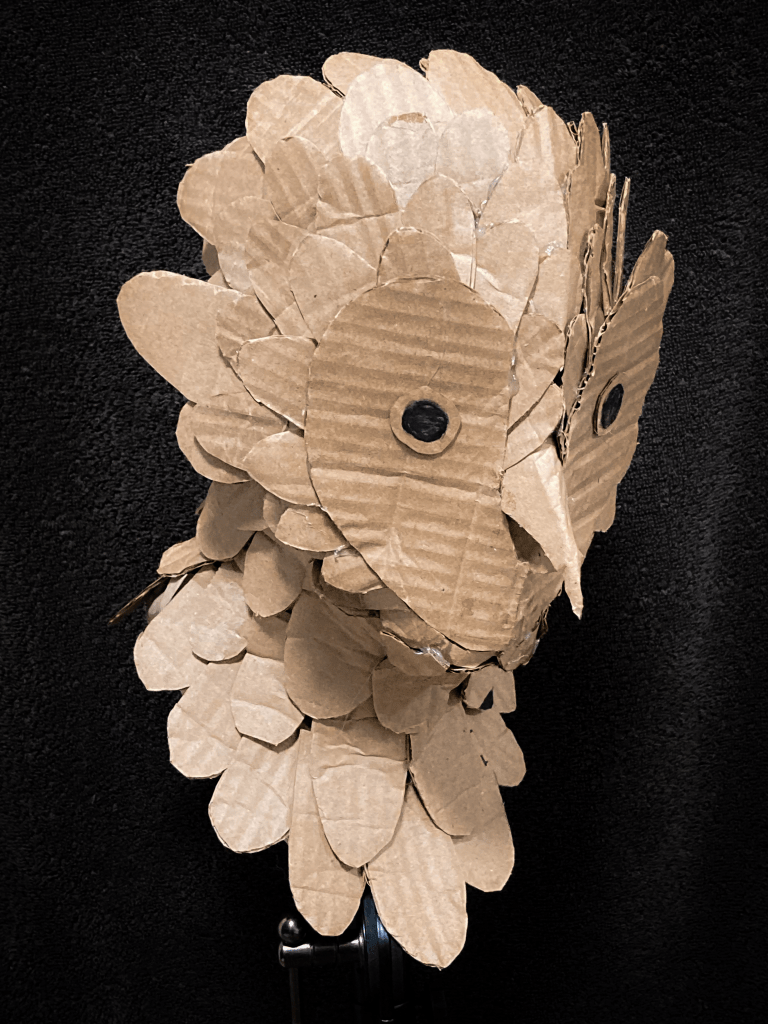
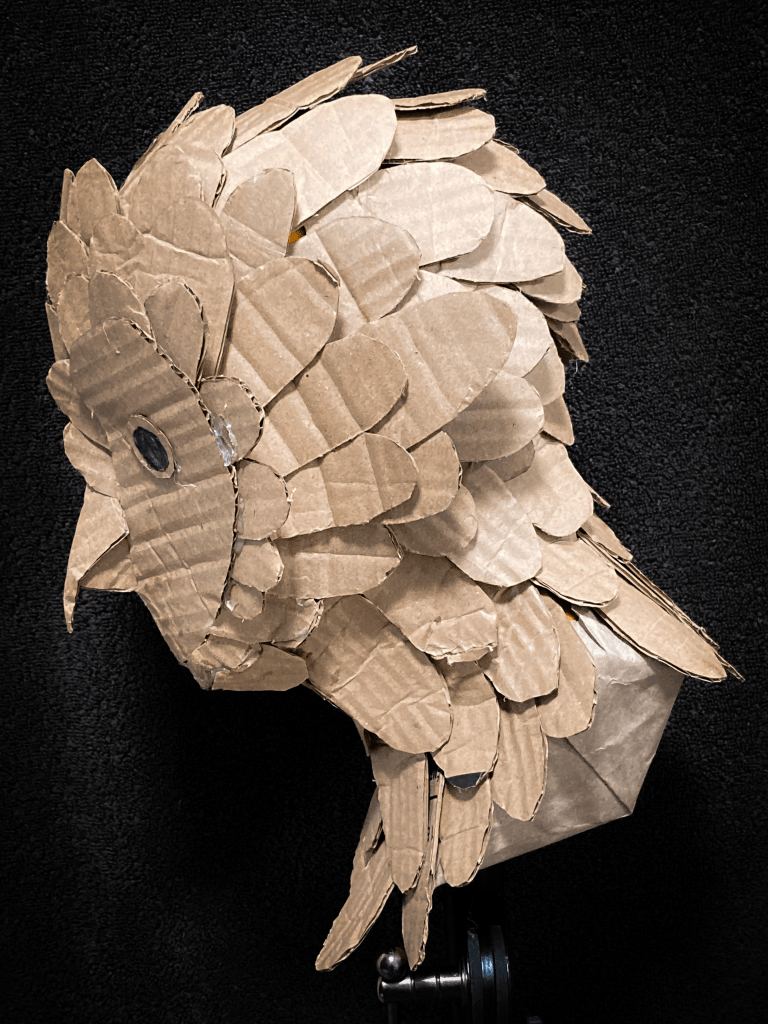
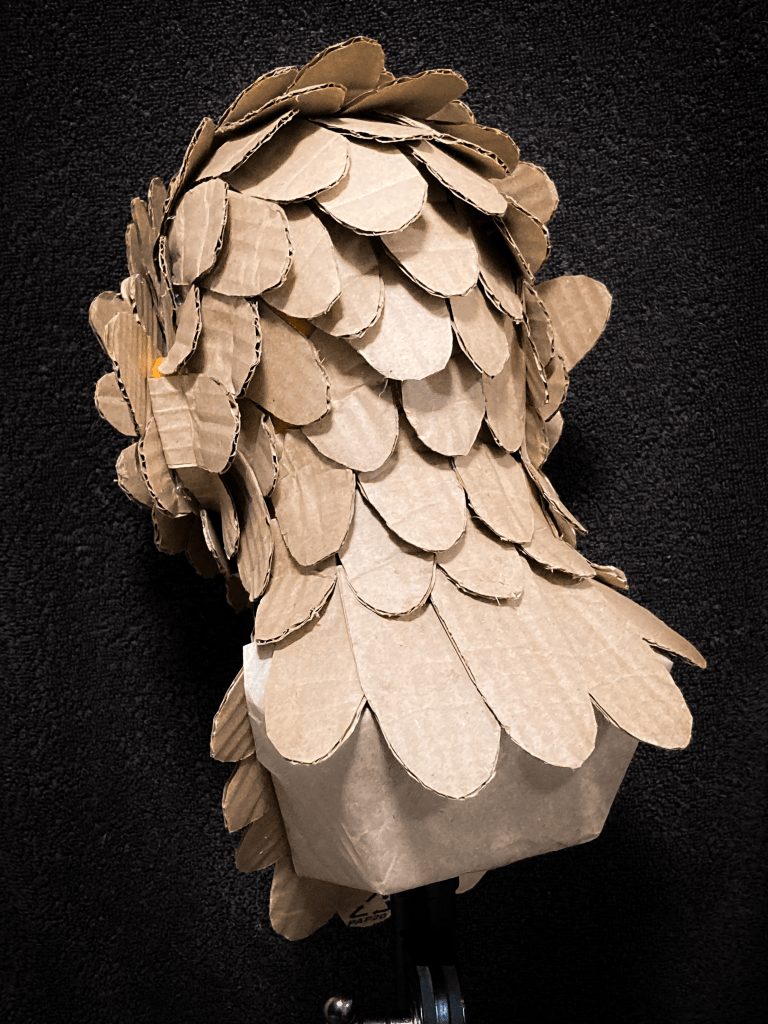
Owlman of Mawman cardboard sculpture
In Cornish folklore, the Owlman, sometimes referred to as the Cornish Owlman or the Owlman of Mawnan, is an owl-like humanoid creature said to have been seen in 1976 in the village of Mawnan, Cornwall. Reported sightings of it flying above the church tower have led some to believe the creature may have been a barn owl, a species that commonly nests in such places. [17]
[1] Psychonautica Studios. (2024). Mothman. [Online]. artstation. Available at: https://www.artstation.com/artwork/VJDgn8 [Accessed 7 January 2026].
[2] Sperasoft studios. (2018). Ambient Creature. [Online]. Artstation. Available at: https://www.artstation.com/artwork/9olrQ [Accessed 7 January 2026].
[3] evolvingeye. (2025). Wendigo. [Online]. Artstation. Available at: https://www.artstation.com/artwork/qeDAVa [Accessed 7 January 2026].
[4] Carl Gonzalez. (2024). Demonic Creature – Design. [Online]. Artstation. Available at: https://www.artstation.com/artwork/KegGa9 [Accessed 7 January 2026].
[5] Charlton T. Lewis. (1879). monstrum. [Online]. perseus.tufts.edu. Available at: https://www.perseus.tufts.edu/hopper/text?doc=Perseus:text:1999.04.0059:entry=monstrum [Accessed 7 January 2026].
[6] Charlton T.Lewis. (1879). crĕātūra. [Online]. perseus.tufts.edu. Available at: https://www.perseus.tufts.edu/hopper/text?doc=Perseus%3Atext%3A1999.04.0059%3Aentry%3Dcreatura [Accessed 7 January 2026].
[7] museo del prado. (1490-1500). The Garden of Earthly Delights Triptych. [Online]. museodelprado. Available at: https://www.museodelprado.es/en/the-collection/art-work/the-garden-of-earthly-delights-triptych/0238 [Accessed 7 January 2026].
[8] Eli Anapur. (2025). The Great Red Dragon Paintings – When William Blake Was Illustrating the Bible. Artsper magazine. 17/03/2025
[9] Artchive. (1948). The Elephants (Large) (1948) by Salvador Dali. [Online]. artchive. Available at: https://www.artchive.com/artwork/the-elephants-large-salvador-dali-1948/ [Accessed 7 January 2026].
[10] WALTER BENJAMIN. (1969). The Work of Art in the Age of Mechanical Reproduction. New York: Schocken Books. s.XII.
[11] J.K. Rowling. (2005). harry potter and the half blood prince. United kingdom: Bloomsbury Publishing. c26.
[12] Pottermore. (2016). 10 things we love about Harry Potter and the Half-Blood Prince. [Online]. haarrypotter.com. Last Updated: 23rd June. Available at: https://www.harrypotter.com/features/10-things-we-love-about-half-blood-prince [Accessed 7 January 2026].
[13] Harry potter and the half blood prince. (2009). [Film]. Leavesden Studios in Hertfordshire: Warner Brothers.
[14] Unknown author. (Unknown publish date). The Wendigos. [Online]. Fandom. Available at: https://until-dawn.fandom.com/wiki/The_Wendigos#Appearance [Accessed 7 January 2026].
[15] combine overwiki. (2025). Headcrab. [Online]. combineoverwiki. Last Updated: 14 December. Available at: https://combineoverwiki.net/wiki/Headcrab [Accessed 7 January 2026].
[16] RizzleDigz. (2020). Headcrabs are TERRIFYING in Half Life: Alyx. [Online]. Youtube. Last Updated: April 16th. Available at: https://www.youtube.com/watch?v=mxN6lRbH4i0 [Accessed 7 January 2026].
[17] Wikipedia. (2025). Owlman. [Online]. Wikipedia. Last Updated: 19 May. Available at: https://en.wikipedia.org/wiki/Owlman [Accessed 7 January 2026].
 Designs by jade